How to Keep Bread Fresh: Storage Tips to Help Every Loaf Last Longer

Jake Newby
| 3 min read
Key Takeaways
- Proper storage helps bread stay fresher longer, preserving flavor, texture and moisture while reducing unnecessary household food waste.
- Choose 100% whole-grain breads with fiber and minimal added sugar for better nutrition and longer-lasting satisfaction.
- Store most breads at room temperature, but keep artisan loaves cut-side down to protect texture and freshness.
- Freeze extra bread before it molds to preserve nutrients, extend shelf life and make slices easy to thaw.
Fresh bread is one of life's simple pleasures, but every type of bread has its shelf life.
Whether you're buying sandwich bread, whole-grain bread or a crusty artisan loaf, knowing how to keep bread fresh can help reduce food waste and preserve flavor and texture.
Start by choosing a nutritious loaf
Before thinking about storage, let’s talk about bread selection and nutrition value. Many nutrition experts recommend choosing breads made with whole grains as the first ingredient because they typically provide more fiber, vitamins and minerals than breads made primarily with refined white flour.
Look for 100% whole wheat or 100% whole-grain breads that provide at least 2 to 3 grams of fiber per slice and contain relatively little added sugar. Sprouted-grain bread and whole-wheat or whole-grain sourdough are nutritious options, particularly when they're made primarily with whole grains.
Store bread at room temperature for the best results
Most breads stay freshest when stored in a cool, dry place away from direct sunlight and heat. Keeping packaged sandwich bread in its original sealed bag is the most effective way to store it.
The inside of bread needs to keep moisture to stay soft and chewable, while the outside needs to get rid of moisture to remain crispy, according to Harvest and Nourish. This is what makes air such a major contributor to staleness. Sealed plastic packaging helps limit moisture loss, keeping soft sandwich bread from drying out. Most loaves remain fresh at room temperature for several days when stored properly.
What’s the best way to store homemade bread?
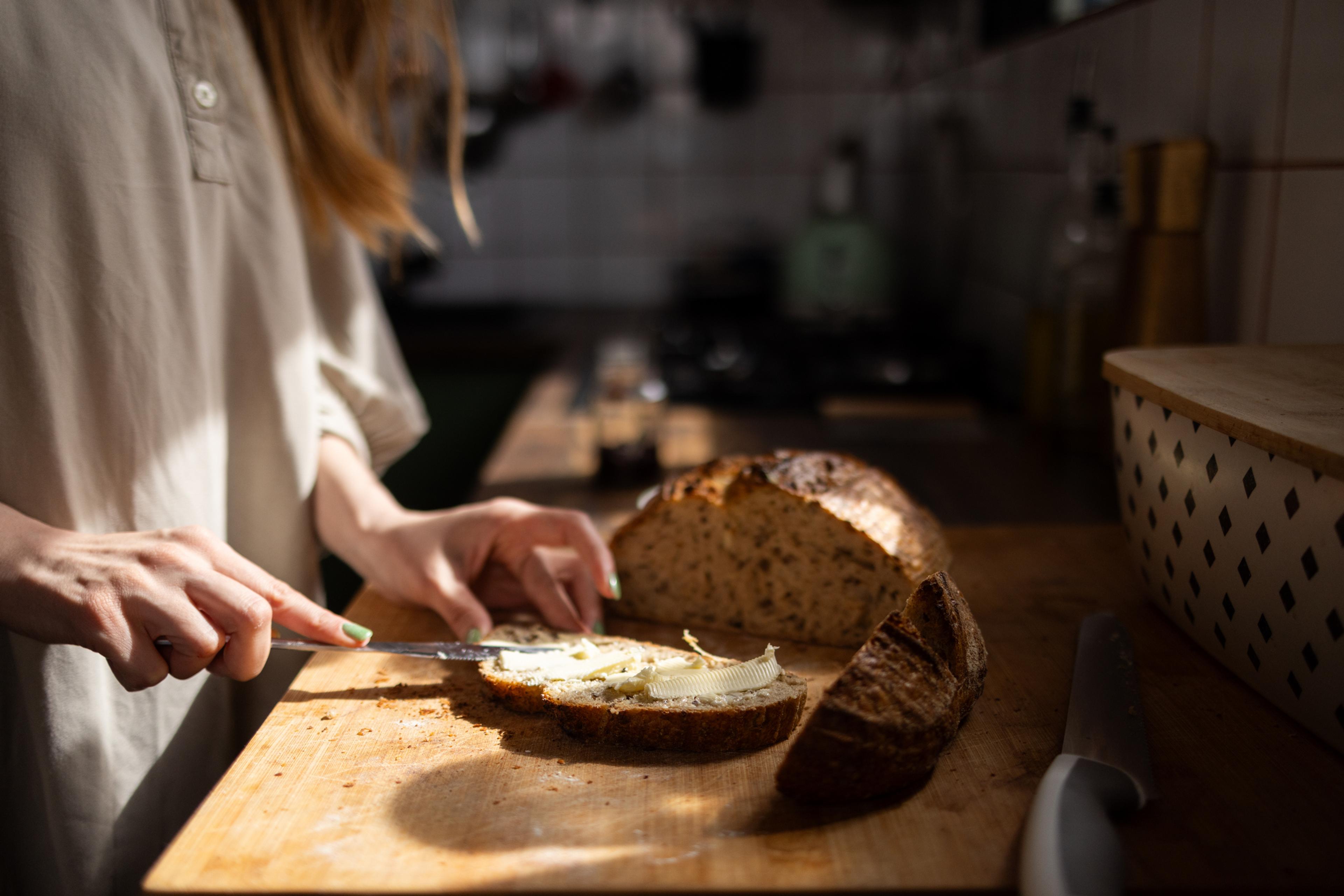
Crusty breads such as sourdough, baguettes and rustic artisan loaves – including those you make from scratch at home – require slightly different storage methods.
Storing these breads cut-side down on a cutting board or inside a bread box helps prevent the exposed interior from drying out. This method also helps loaves maintain their signature crust.
Storing artisan bread in plastic may keep it from drying out, but it can also soften the crust and reduce the texture many people enjoy. For soft-crust sandwich rolls such as focaccia or biscuits, Harvest and Nourish recommends storing in a food-grade polyethylene bags with a twist tie for three3 to five5 days, or in a tightly sealed bread box for two 2 to four 4 days.
Avoid storing bread in the refrigerator
Did you know refrigeration can speed up a loaf of bread’s staling process? Cooler temperatures cause changes in the bread's starches, which can cause them to become dry and firm more quickly.
Unless your kitchen is unusually hot or humid, room-temperature storage is generally preferable. That’s because refrigeration may slow mold development in particularly warm or humid environments.
Should I freeze bread to keep it fresh?
If you won't finish a loaf within a few days, freezing is one of the best ways to preserve freshness, as bread freezes well. Freeze extra bread to save it before it turns moldy by slicing a loaf and placing the pieces in an airtight freezer bag. This allows you to thaw only the slices you need.
Frozen bread retains virtually all of its original nutrients. Your bread’s texture may change slightly after thawing, but most sandwich breads and whole-grain loaves maintain their quality. Toasting thawed bread may help restore some of its original texture.
Read on:
Photo credit: Getty Images