How to Get Started Paddle Boarding

Jazmin Anderson
| 4 min read
Key Takeaways
- Paddle boarding is a great entry point for those new to the world of aquatics, building arm strength and strengthening legs, core and balance.
- Pick a shallow body of water with a calm surface such as a small lake for your first time paddle boarding.
- Proper equipment, including a paddle board, paddle, personal flotation device, safety whistle and leash, is necessary for safety, and renting or buying gear is an option.
The watersports season has officially arrived in Michigan. If you are new to the world of aquatics, paddle boarding might be a good entry for you.
Paddling builds arm strength, while balancing on top of the water strengthens your legs, conditions your core and improves your balance. It’s a great option if you want to target multiple muscle groups at once.
Here are some tips on getting out on the water.
Choose a location
Be sure to choose a location appropriate for your skill level. If this is your first time paddle boarding, a shallow body of water with a calm surface, such as a small lake, is your best bet.
Go on days when the weather is clear and temperatures are warm. Good conditions like that will ensure you get plenty of time on the water.
Get your equipment
It is important for your safety that you have proper equipment. You can opt to rent or buy your gear. Regardless of your preferences, here is a list of items you may need:
- Paddle board: You will have to choose a board that is appropriate for your weight, skill level and the conditions of the location you selected. If you are renting your equipment, you can ask an employee to help you select the best fit for you.
- Paddle: Make sure the end of the paddle reaches up to your wrist when you raise your arm in the air to select the correct length.
- Personal flotation device (PFD): The U.S. Coast Guard classifies stand-up paddle boards as vessels, which means you are required to have a PFD with you. While adults are not required to wear one while on water, children are.
- Safety whistle: This is also a piece of equipment required by the Coast Guard.
- Leash: You can connect your paddle board to yourself with a leash, keeping it close to you in case you fall off. Since the board stays afloat on top of the water, it can also be beneficial for your safety to stay attached to it.
Ease into it
Before you try to stand up, first see whether you can balance while sitting or kneeling. The effort that it takes to balance in these positions will already work your core. So, if you aren’t ready to get up yet or have other limitations, you will still get a workout.
Going with an instructor or a friend who is more experienced in paddle boarding could also be helpful.
How to stand
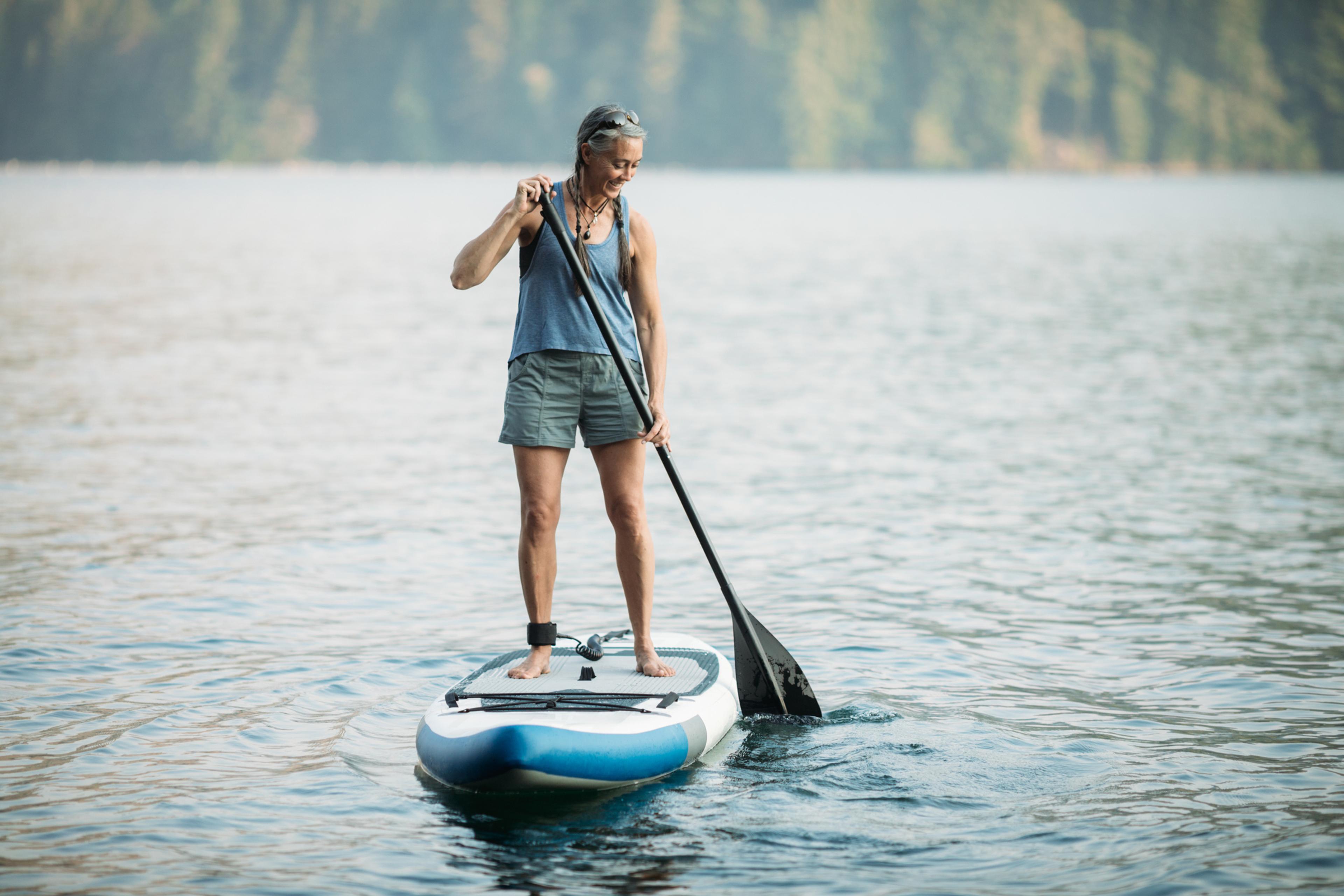
Once you feel comfortable kneeling on the board, you can attempt standing up. Make sure you are in the center of your board while kneeling and place your hands at the sides. Slowly replace your knees with your feet one at a time.
Once you’re on your feet, slowly raise the rest of your body until you are standing straight. Keep your legs relaxed while standing to ensure you stay stable on the water.
How to use the paddle
Make sure the blade of your paddle is angling toward the nose of the board. When paddling on the right side, your left hand should be holding the top of the paddle, and your right hand should be on the shaft. When you switch sides, the hands should switch positions as well. You should alternate sides after every third to fifth stroke.
If you want to move forward, push away from the front of the board. If you want to go backward, push toward the front of the board. To turn, keep paddling on one side of the board without switching.
How to fall
Learning how to fall properly is an important part of keeping yourself safe while out on the water. When you feel like you are losing your balance, aim to the side so you fall into the water rather than onto your board. Try to fall flat to avoid going too deep in the water and keep hold of your paddle. If you lose it, get on your board first before retrieving it.
Photo credit: Getty Images
Related: