How to Hunt for Petoskey Stones

Lindsay Knake
| 3 min read
Key Takeaways
- Hunting for Petoskey stones is a fun and relaxing activity that can be done by adults and children alike, with tips including finding a rocky, quiet beach and using a sieve to spot the stones.
- Petoskey stones are unique to the Great Lakes and can be found in various sizes loose on beaches, especially near Northwest Michigan and the town of Petoskey, which is the stone's namesake.
- Hunting for Petoskey stones is an exercise in patience, and the best times to find them are in the spring, during rain and after storms, which can bring new stones up to the shoreline.
One of Michigan’s most famous treasures is the Petoskey stone.
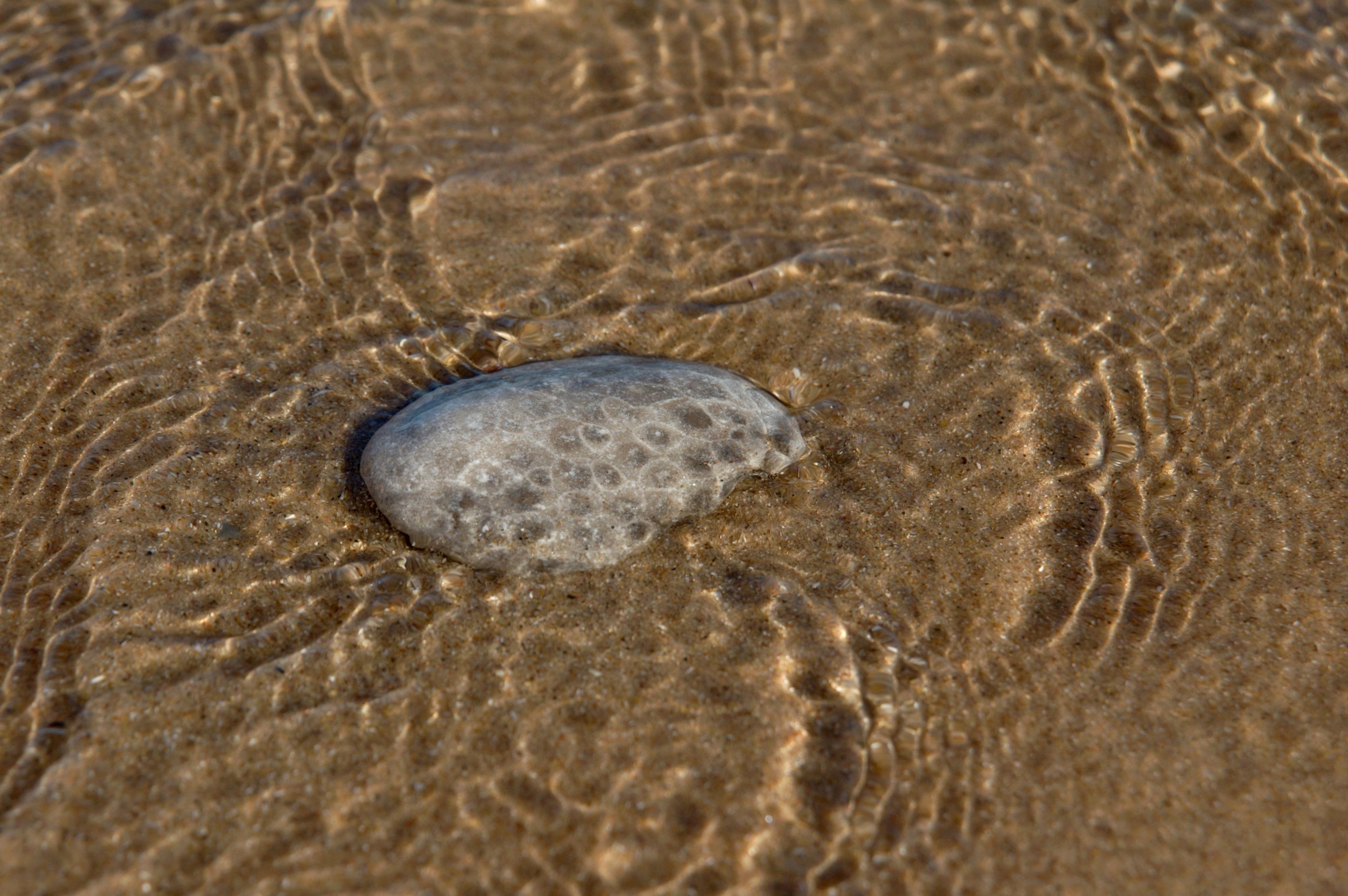
The honeycombed, gray stone is unique to the Great Lakes. Michigan’s state stone since 1965, the Petoskey is composed of pre-historic fossilized rugose coral, Hexagonaria percarinata. This rugose coral lived about 350 million years ago when Michigan was near the Earth’s equator and was under a warm, shallow sea. The Petoskey stone has six-sided cells lined in white or light gray, known as corallites, and the dark spot in the middle was a coral polyp’s mouth that contained tentacles. Now fossilized, this pattern is what makes the Petoskey stone a great find.
Two million years ago, glaciers pulled the fossils from the bedrock, grounded them down to rounded stones and pushed them across Northern Michigan. That’s why you find Petoskey stones of many sizes loose on beaches, especially near Northwest Michigan and the town of Petoskey, which is the stone’s namesake.
Hunting for Petoskey stones along Michigan’s shores is a pastime for many, and it’s fun for adults and children alike. Here are tips for looking for Petoskey stones.
Find a rocky, quiet beach
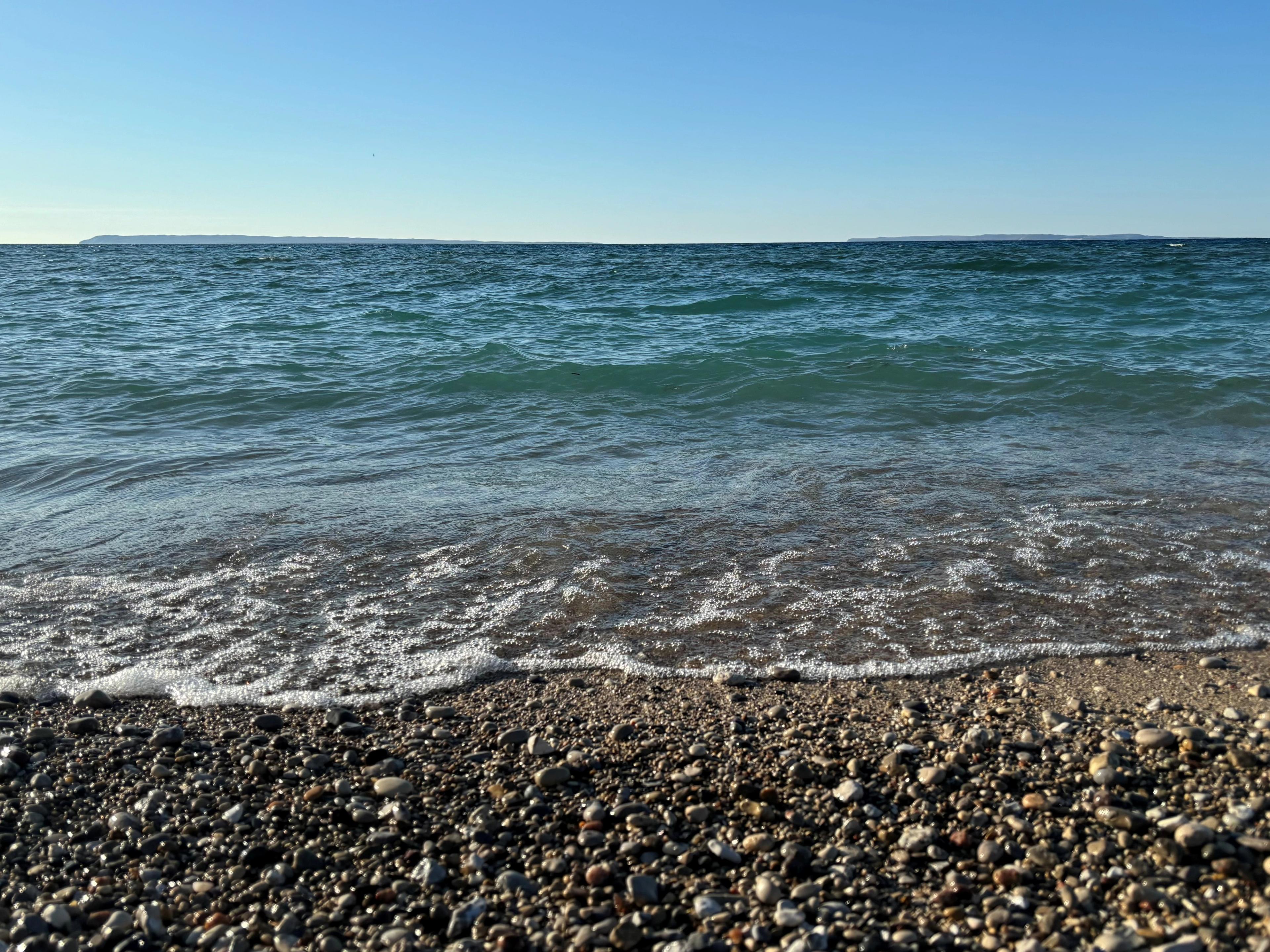
Petoskies are concentrated on Lake Michigan’s Little Grand Traverse Bay, but you can also find them along the Straits of Mackinac, Lake Huron and inland lakes and rivers in Northern Michigan.
Head away from the parking lot or entrance to the beach where the stones may be picked over. Petoskey stones are typically nestled among the many other stones and rocks on the shoreline. You may want to wear sandals or water shoes to protect your feet.
Splash water onto dry stones or bring a sieve
The coral pattern of Petoskies can be nearly invisible when the stones are dry. You can splash water onto dry sections of the beach to reveal the patterns and make them easier to spot.
Alternatively, you can try a sand or rock sieve – even children’s toys can work. Scoop up dry rocks or grab some a few feet into the water and sift through them in the sieve.
Best times to hunt for Petoskey stones
The spring is typically the best time to find Petoskey stones after the winter waves and ice churn up the shores and bring new stones to the shoreline. However, you can find Petoskey stones any time of the year. Rain and storms, which wet the stones and bring new stones up to the shore can also be a good time to look.
Be patient
Hunting for Petoskey stones is an exercise in patience. It may take a while to spot one, and you may only find one or two in an hour or so of looking. With time, your eye can become more practiced, and it can get easier.
Regardless of how successful your Petoskey search is, spending time outdoors and by the water can be a mindful, relaxing experience that can boost your mood and support your mental health.
Know the rules of rock collecting in Michigan
There are rules for rock collecting in the Mitten state. The Michigan Department of Natural Resources (DNR) limits individuals to 25 pounds of stones each year on state land.
While you are allowed to take rocks from Michigan’s state parks, it is illegal to remove stones and rocks from National Parks, Lakeshores or Forests or any National Recreational lands. You can enjoy a Petoskey hunt in places like Sleeping Bear Dunes and take photos of your finds, but you must leave them to conserve the environment.
Check with landowners before entering any private property.
It’s easy to get hooked on Petoskey hunting, which is fun to share with family and friends. You may find yourself automatically looking every time you get to a Michigan shoreline.
Photo credit: Getty Images and courtesy of Lindsay Knake