How to Make Sourdough Starter

Lindsay Knake
| 3 min read
Key Takeaways
- Making sourdough bread at home can be a fun and rewarding process that yields a healthier, gut-friendly alternative to traditional bread.
- Using whole grain flour to make sourdough bread can aid in lower cholesterol and help maintain steady blood sugar levels
- Creating a sourdough starter from scratch requires patience and regular feeding, but can be a fun experiment for families and a great way to get children involved in learning to bake and eat nutritious foods.
Making sourdough bread can be a fun challenge and an art as much as a science.
If you haven’t been on the sourdough train in recent years and want to see what it’s all about, here’s a guide to making your own starter.
The benefits of sourdough bread
Sourdough bread offers gut-healthy prebiotics, and it typically has a lower glycemic index than white bread, according to the Cleveland Clinic.
By making sourdough at home, you can use whole grain flour to make healthier bread, waffles, crackers and English muffins, among many other types of baked goods. Whole grains are nutrient dense and offer phytochemicals, antioxidants, fiber, proteins, vitamins and minerals, according to Harvard Health. Replacing refined grains with whole grains can aid in lower cholesterol and help maintain steady blood sugar levels.
How to make whole grain sourdough starter
Use a glass, nonreactive metal or plastic bowl or jar for the starter. Make sure it’s large enough for the starter to double in size without overflowing. Start with unbleached whole grain flour. Bleaching kills yeast and healthy bacteria in flour, which means it won’t ferment properly to create a good starter.
Day 1
You’ll need:
- ½ cup or 60 grams of whole wheat flour
- ½ cup or 60 grams of lukewarm water
Add the water and flour to a bowl or large jar and mix with a fork to create a thick batter. Cover it loosely with a clean cloth and let it rest in a spot that’s about 70 to 75 degrees Fahrenheit for 24 hours.
Day 2
Check for bubbles on the surface, but it’s OK if you don’t see any yet. Let the starter rest for another 24 hours.
Day 3
Remove half the starter from the jar and add ½ cup of whole wheat flour and a ½ cup of warm water, then stir. Cover the bowl again and let it rest for another 24 hours.
Days 4, 5 and 6
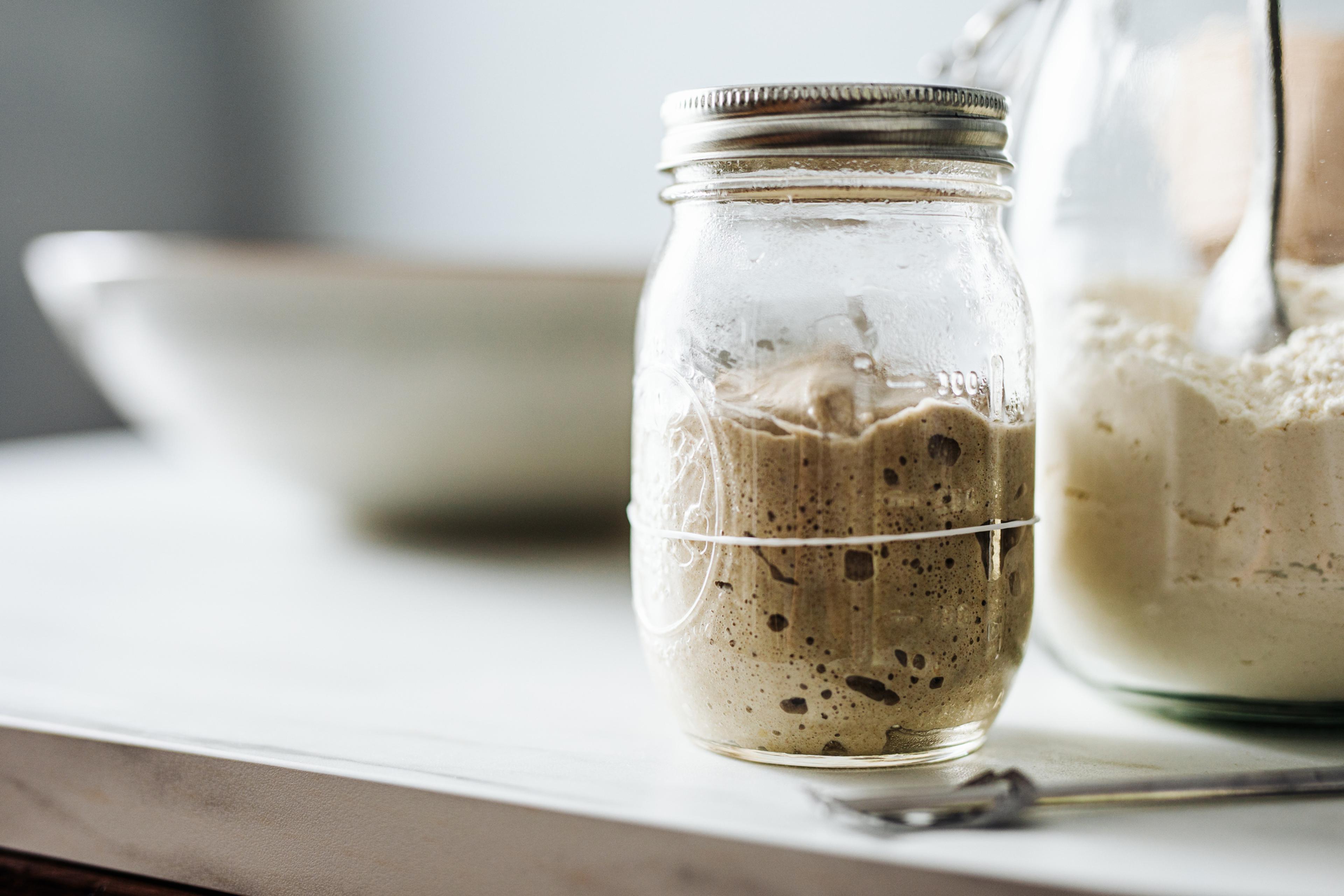
Repeat the feeding process each day. You can use a rubber band or tape to note the growth of the starter as it ferments and rises.
Day 7
You should see a lot of bubbles, and the texture of the starter should be puffy and spongy. It should smell a little sour and pleasant, but not astringent. Then, transfer the starter to a clean jar. It’s now ready for baking or to store in the refrigerator.
Maintaining your starter
If you use your starter a few times a week, you can keep it covered on the counter and feed it daily. If you use it less often, store it in the refrigerator and feed it about once a week. Take the starter out of the refrigerator and feed it for a few days before baking.
Making sourdough can also be a fun experiment for the family and to get children involved in learning to bake and eat nutritious foods.
FAQ
How long does a sourdough starter last? If you feed and store it properly, your starter could last indefinitely. You can also dry starter discard to keep in case the starter goes bad or if you want to provide some to a friend.
How do I know if the starter goes bad? Mold, discoloring or an acrid smell are all signs your starter is bad and you should discard it. If it smells like alcohol and has a layer of liquid on top, called hooch, but the starter underneath is still beige, you can pour that off and feed the starter as usual.
What can kill a sourdough starter? Not feeding your sourdough will kill it eventually, but starter can survive in the refrigerator for weeks. Bacteria getting into the starter can make it go bad, which is why it’s important to use clean hands and utensils every time you stir or measure your starter. Transferring it to a clean container every few months can also help keep the starter healthy.
Photo credit: Getty Images