How to Temperature Check Your Meat

Shanthi Appelo, MS, RD
| 3 min read
Cooking meat to the right temperature is one of the most important steps in preparing a great meal. Whether you're grilling steaks, roasting chicken or cooking a holiday turkey, checking the internal temperature helps ensure your food is both safe to eat and cooked exactly how you like it.
Many people rely on cooking times alone, but factors like thickness, cooking method and oven accuracy can make timing unreliable. The most dependable way to know when meat is done is by using a thermometer.
Why meat temperature matters
Temperature checking helps with two key things:
- Food safety. Certain meats must reach specific internal temperatures to kill harmful bacteria.
- Quality and texture. Overcooking meat can make it dry and tough, while undercooking can leave it unsafe.
Choose the right thermometer
There are several types of meat thermometers available.
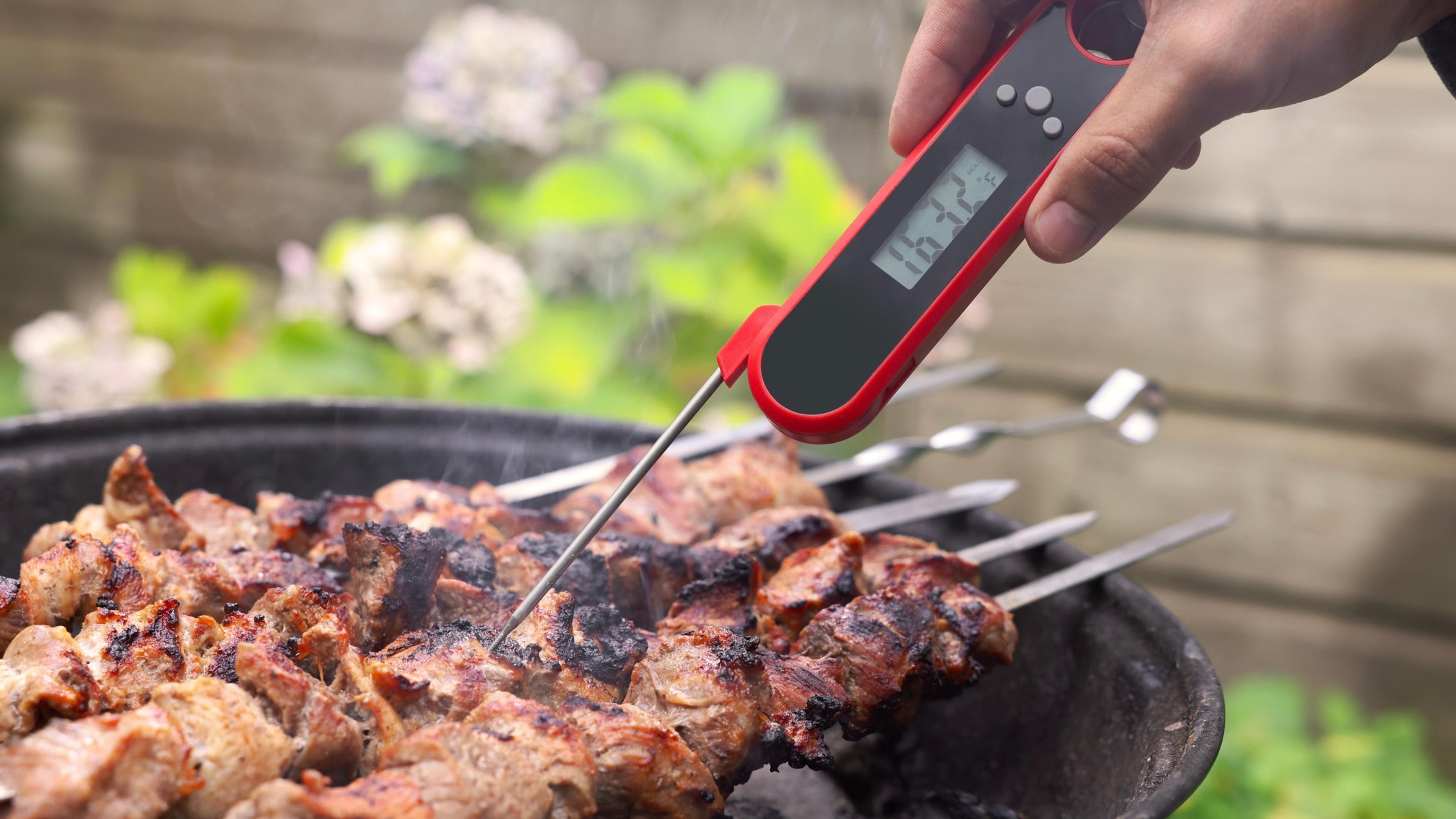
Instant-read thermometers:
- Provide a temperature reading in a few seconds
- Best for checking food near the end of cooking
- Ideal for steaks, chicken pieces and pork chops
Leave-in thermometers:
- Stay in the meat while it cooks
- Often used for roasting or smoking large cuts
- Some connect to digital displays outside the oven
Digital probe thermometers:
- Use a wired probe placed in the meat
- Monitor temperature continuously
- Great for large roasts or slow cooking
Where to insert the thermometer
To get an accurate reading, placement matters. Always insert the thermometer into the thickest part of the meat.
- Steak: insert through the side into the center
- Chicken breast: insert into the thickest section
- Whole chicken or turkey: check the inner thigh without touching bone
- Roasts: insert into the center of the thickest area
Avoid bones, fat pockets and gristle, these areas heat differently and can give inaccurate readings.
Safe internal temperatures for meat
Here are recommended internal temperatures for safe cooking:
- Chicken and turkey 165°F (74°C)
- Ground beef 160°F (71°C)
- Ground pork 160°F (71°C)
- Pork chops or pork roast 145°F (63°C)
- Beef steak or roast 145°F (63°C)
- Fish 145°F (63°C)
Steak doneness temperatures
Steak is often cooked to varying levels of doneness, which are determined by the internal temperature of the meat.
- Rare (cool red center, very tender) 120–125°F
- Medium rare 130–135°F (warm red center, juicy and soft)
- Medium (warm pink center, firmer texture) 140–145°F
- Medium well (slight hint of pink in the center) 150–155°F
- Well done ((fully cooked through, little to no pink) 160°F+
Remove steak from heat when it is about 5°F below your target temperature, since it will continue to cook slightly while resting.
Let the meat rest
After removing meat from heat, the internal temperature often continues to rise slightly. This is called carryover cooking.
Let meat rest for:
- Steaks: 5 to 10 minutes
- Chicken: 5 minutes
- Large roasts or turkey: 15 to 30 minutes
Resting allows juices to redistribute, making the meat more tender and flavorful.
Tips for accurate temperature checking
- Check multiple spots. Large cuts may cook unevenly.
- Insert the thermometer before the end of cooking. This prevents overcooking while waiting to check.
- Clean the thermometer between uses. Use hot soapy water or sanitizer, especially when checking different meats.
- Calibrate your thermometer occasionally. This helps ensure accuracy over time.
Common mistakes to avoid
- Relying only on color. Meat can look done before reaching a safe temperature.
- Checking too close to bone. Bones conduct heat differently and can give false readings.
- Not waiting long enough. Allow the thermometer a few seconds to stabilize for an accurate reading.