Dry January? Tips to be Successful
A Healthier Michigan
| 5 min read

After the celebratory excesses of the holidays – gifts, parties and lots of drinks being poured – many people are looking to pare down all the extras as we head into the New Year. Resolutions focused on health and well-being are always trending this time of year.
But so is Dry January – a month-long pledge to abstain from alcohol that’s been growing in popularity in recent years.
What is Dry January?
Dry January started gaining attention nearly 15 years ago in Britain as a public health campaign to encourage people to avoid drinking. It’s become an all-out movement on this side of the Atlantic in recent years, with many bars, restaurants and other businesses participating by offering special alcohol-free menus, mocktails and other non-alcoholic options.
A 2024 poll revealed that a quarter of Americans age 21 and over participated in Dry January. Among those participants who drink alcohol, 25% reported they successfully completed Dry January – just shy of the 27% who were ‘very likely’ to participate ahead of the event.
Dry January does not mean the same thing to everyone
Those participating in Dry January lean in for different reasons. The general parameters of the month-long challenge is to completely abstain for alcohol for the entire month of January. People accept this challenge for various reasons.
Some plan to cut out alcohol for the entire month as a way to cut calories or be healthier. Others want to use the self-imposed prohibition as a way to “reset” their drinking pattern, especially those who may not be happy with the amount of binge drinking they engaged in during the holidays. But not everyone takes an all-or-nothing approach to Dry January.
Mental and physical risks of alcohol
In early 2025, the United States, the Surgeon General issued an advisory on the link between alcohol consumption and cancer, recommending further cautions be added to the warning labels on alcohol products.
In the U.S., there are about 100,000 alcohol-related cancer cases and about 20,000 alcohol-related cancer deaths annually. In addition to cancer risk, ongoing alcohol consumption is also linked to several chronic conditions including:
- Heart and vascular problems, such as high blood pressure, stroke and heart disease
- Digestive disorders
- Mental health conditions like anxiety or depression
- Liver disease
- Weakened immune system
Studies have shown that people who regularly drink alcohol, then stopped to participate in Dry January, reported these benefits:
- Increased daily energy
- Better sleep
- Weight loss
- Lower blood pressure
- Lower cholesterol
- Fewer cancer-linked proteins in their blood
Dry January tips to be successful
Depending on how much alcohol you normally drink – and the environment in which you drink – you may need to make some lifestyle adjustments ahead of Dry January.
The hardest hurdle to clear for some is avoiding alcohol in social settings. Here are some tips to be successful this January:
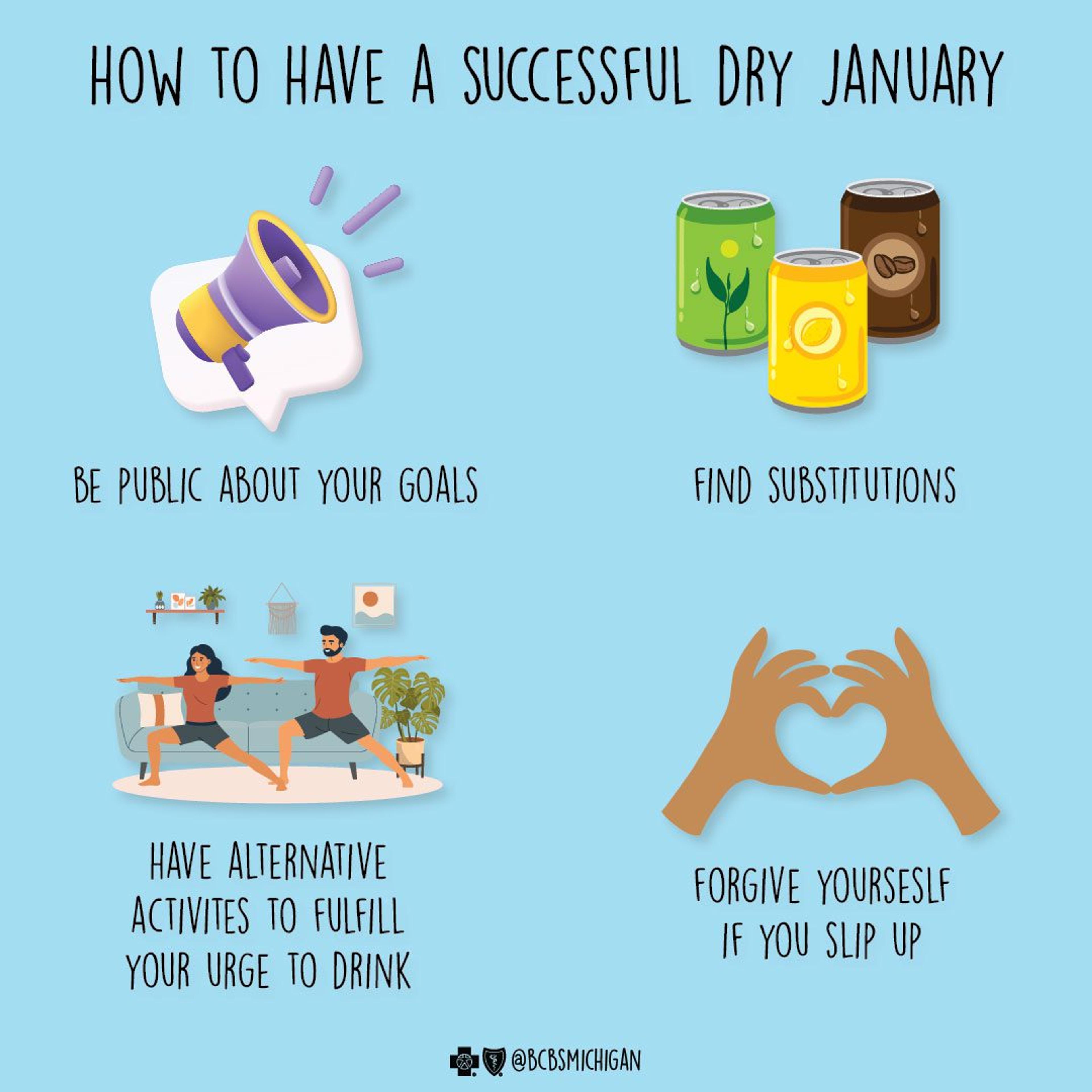
- Be firm with your intentions: Part of the reason it’s tricky to navigate sobriety in social settings is because of social pressure or the sometimes-awkward optics of not drinking. Let the people in your life know you are not drinking. Since Dry January is so popular, no one should bat an eye. But it helps to be forthright in social situations, if nothing else but to hold yourself accountable.
- Drink N/A beverages: Sitting at the bar or at a friend's house without a drink in your hand might make you feel naked. Plus, you may go into a certain event with every intention to avoid alcohol only to feel like the odd person out as people order drinks, like you are depriving yourself. A mocktail or N/A spirit or beer can keep your hands busy and help you mimic a night of drinking, but it can also feel festive to sip on an elevated beverage instead of soda or water.
- Set a time to leave: Having a firm exit strategy can be helpful for many reasons. If you know you’ll only be at an event for an hour and a half, for example, you have a finish line to strive toward. Express this time to at least a few people in your circle so they know your intentions and don’t think you’re leaving on a whim when the time comes.
- Go all in on alcohol-free activities: You may be tempted to break the Dry January challenge if you hang out at bars or other environments in which alcohol is present. Spending more time exercising, going to the movies, hanging out with young members of your family such as nieces and nephews and visiting indoor museums and art exhibits are a few examples of non-alcohol-based activities to fill up your January agenda with.
- Cling to a sober buddy: When hanging out at events or in social settings, sticking close to a non-drinker during a gathering can be a great way to maintain sobriety. This takes pressure off you if you’re not the only one declining drinks, especially in a small, intimate group. Plus, as others have multiple drinks and get potentially more difficult to talk to or be around, you have a sober buddy there to chat with and lean on.
If your intent during Dry January is to reset your drinking habits, be mindful about not diving head first into drinking - particularly the way you were that made you consider Dry January in the first place - as soon as the calendar flips to February.
Spend time at the end of the month taking stock of the positive changes abstaining from alcohol has brought into your life and keep those in mind as you look to reshape your relationship with alcohol moving forward.
Read on:
Photo credit: Getty Images