Why You Shouldn’t Wear Shoes in the House

Lindsay Knake
| 3 min read
Key Takeaways
- Shoes can carry bacteria, including MRSA, E. coli and C. diff, as well as contaminants such as lead, pesticides and other chemicals that can be tracked onto household floors and carpets.
- Research shows footwear can harbor high levels of bacteria, increasing the risk of exposure, particularly for young children who crawl or play on the floor and frequently touch their faces.
- Creating a shoe-free home can help reduce germs and contaminants indoors. Experts recommend removing shoes at the door, regularly cleaning floors and using indoor-only shoes or slippers when additional support or traction is needed.
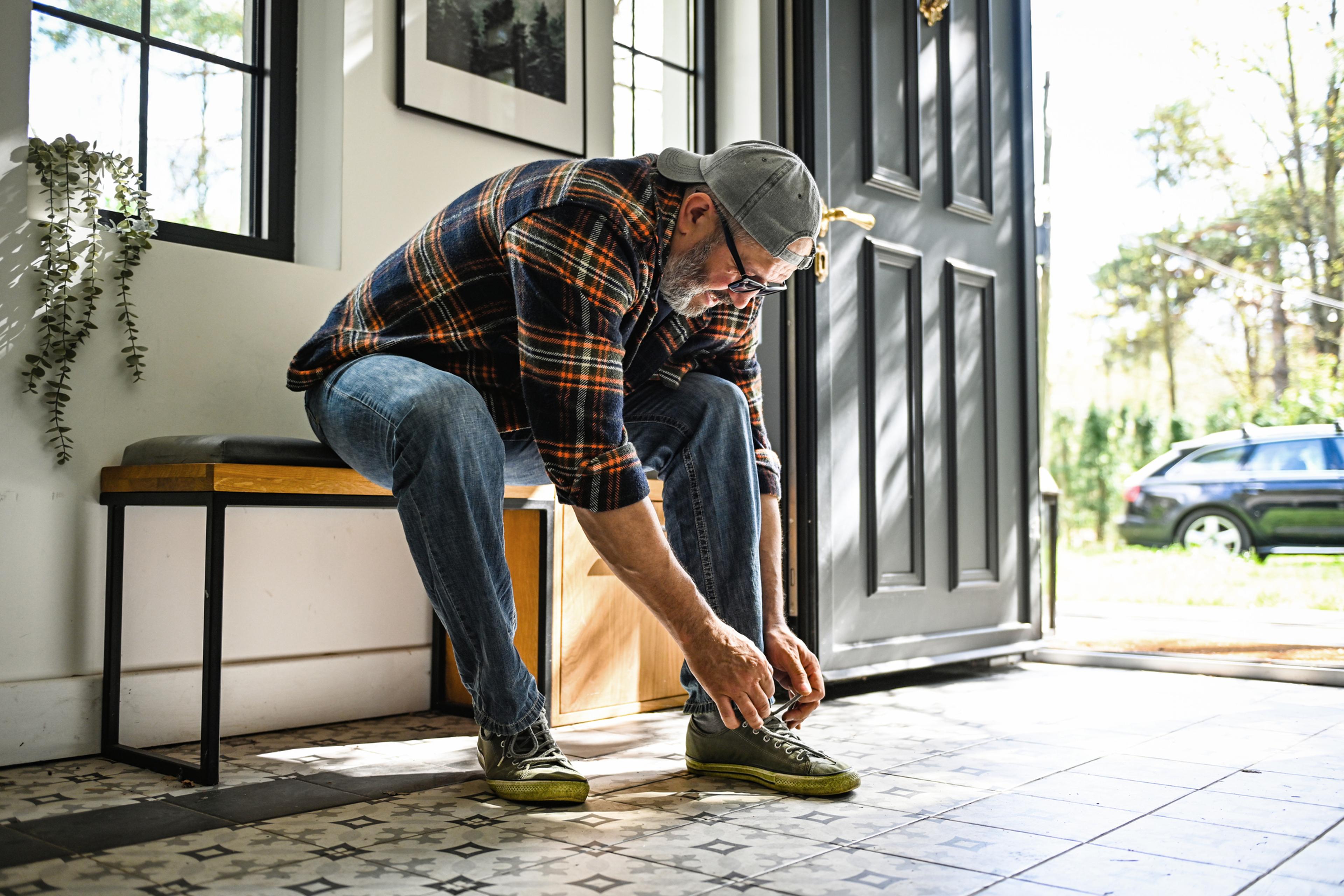
You may not have considered what you could be tracking into your house on the bottom of your shoes.
But as you walk on sidewalks, public streets and stores, your shoes can pick up more bacteria than you find on a toilet seat. These bacteria can cause illnesses
Taking your shoes off when you get home is one way you can reduce your risk of picking up one of these illnesses. Here’s a look at some of the research and some tips on moving forward sans outdoors shoes in your home.
Why you shouldn’t wear shoes in the house
Your shoes can track bacteria and even heavy metals onto your carpets and floors, where the germs can live for days. If you lie on the floor and then touch your face, or if a child crawls on the floor, you can transfer those into your body.
Some of the common germs found on shoes, according to the Cleveland Clinic, include:
- Methicillin-resistant Staphylococcus aureus (MRSA): antibiotic-resistant bacteria that can cause life-threatening infections
- Escherichia coli (E. coli): bacteria that can cause diarrhea, vomiting and fever
- Clostridioides difficile (C. diff): a bacterium that can cause severe, life-threatening diarrhea and colitis
In a small 2008 study at the University of Arizona, researchers found 26 pairs of shoes carried 3,600 to 8 million colony-forming units of bacteria. Research at the University of Houston in 2021 found 45% of shoes they tested carried C. diff bacteria. Shoes carries more than public areas and healthcare settings the researchers took samples from in a three-year period. In a 2016 meta-analysis of 13 studies in the Journal of Applied Microbiology, researchers noted about half or more of employees in healthcare settings such as hospitals carried MRSA and other bacteria that cause gastrointestinal illnesses on their shoes.
But infection-causing bacteria aren’t the only issue. Shoes can also track in heavy metals such as lead, asphalt chemicals and fertilizers, insecticides and pesticides, per the Cleveland Clinic. Lead is not safe in any amount, and children are particularly vulnerable to lead poisoning. These other chemicals can cause irritation in your eyes and throat.
Tips on an outdoor-shoe free home
About one-third of Americans leave their shoes on at home, per a 2023 CBS/YouGov poll. For those of you who want to make a change, here are a few tips on cleaning your home and what to do moving forward:
- Clean your carpets and rugs
- Vacuum with a HEPA filter
- Mop your floors with a mild disinfectant and warm water
Place a mat and/or shoe rack by the door as a reminder for adults and kids alike to kick off their shoes straightaway.
You can let guests know ahead of time you’ll ask them to remove their shoes in case they are used to leaving them on at your place. Some people may feel more comfortable with a pair of slippers or socks.
But what if you like wearing shoes inside for comfort or health? For those with balance issues or neuropathy, indoor shoes can provide necessary traction for safety, especially on hardwood, tile or linoleum floors. Buy a pair you keep exclusively for indoor use, not even a run into the garage or to the mailbox. Even a pair of hard-soled slippers may give you the comfort you prefer without the germs.
Photo credit: Getty Images