The Loneliness Epidemic: Is AI Helping?
| 1 min read
00:00
00:00
About the Show
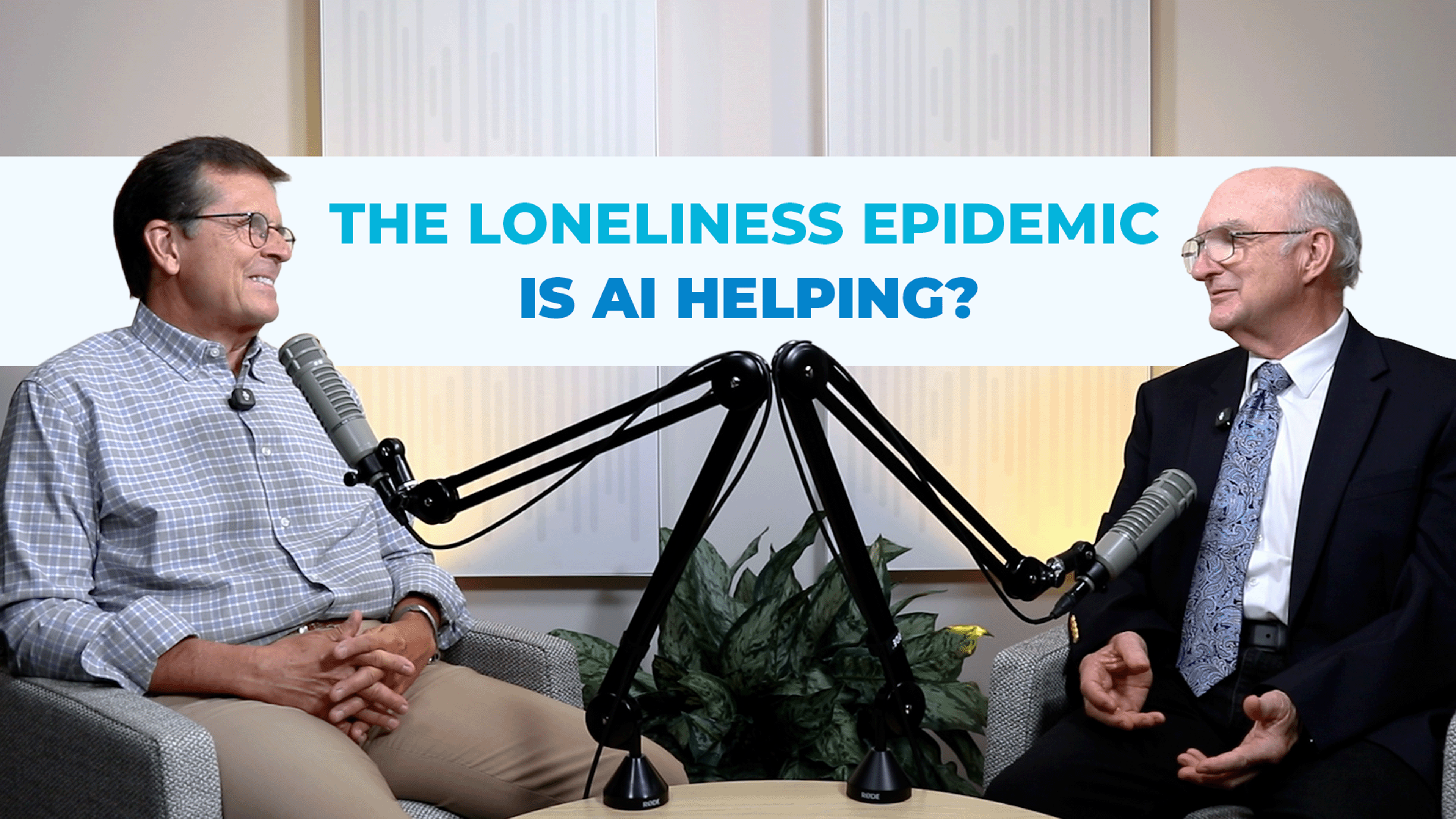
In the spring of 2023, the U.S. Surgeon General declared loneliness an epidemic. People need connection; loneliness can raise our blood pressure, increase the risk of mental illness and even heart disease. On this episode, Chuck Gaidica is joined by Medical Director of Behavioral Health Dr. William Beecroft to explain loneliness and whether AI is doing more harm or good.
In this episode of A Healthier Michigan Podcast, we explore:
- What is loneliness?
- Is it the same for everyone?
- How can it affect us?
- Can AI help with loneliness?
Transcript
Here is the full transcript of this episode. You can listen to the audio version on streaming platforms or watch on YouTube.
The Loneliness Epidemic: Is AI Helping?
Chuck Gaidica:
You know, in recent years, loneliness has become a growing public health concern.
Chuck Gaidica:
In 2023, the US Surgeon General declared loneliness and social isolation an epidemic, citing the impact a lack of meaningful connection can have on both our mental and physical health at the same time. Technology has transformed the way people communicate, you know, social media, texting, online communities and now artificial intelligence tools have made it easier than ever to stay connected, so to speak, digitally.
Chuck Gaidica:
Despite these advances, many people still report increased isolation and feeling disconnected. Today, we're exploring the relationship between loneliness, technology, and the growing role AI is playing in how people seek companionship, support and connection.
Chuck Gaidica:
Welcome to a Healthier Michigan podcast. I'm your host, Chuck Gaidica, and every other week we'll explore topics that help you live your life. Today, we're joined by Medical Director of Behavioral Health Dr. William Beecroft, to discuss the rise of loneliness across all demographics and how technology may be shaping social connection, and what healthy human connection looks like in an increasingly digital world.
Chuck Gaidica:
Good to see you, doctor.
Dr. William Beecroft:
Good to see you as well. Yeah, thanks for the time today,
What is Loneliness?
Chuck Gaidica:
So, doctor, I guess a good place to start is the main question. What is loneliness?
Dr. William Beecroft:
It is really the pervasive sense of being alone that you. That emptiness that can go on with that. But also some people actually like being alone. So for them, it's not as lonely or as discomforting as it is for others. But the majority of us perceive loneliness as that emptiness, that kind of hole inside yourself that is just very uncomfortable at times.
Chuck Gaidica:
So, you know, for some of us, this can come and go, right? Sometimes you can be lonely, sometimes you're not. That seems maybe it's more healthful or normal, quote unquote. But I don't know if that's really the case. How do we get through this idea of being alone and how it's different for each person?
Can you feel lonely even when you’re around other people?
Dr. William Beecroft:
Because you may have a spouse where they don't mind being off by themselves. And you, you know, you're yearning for a connection, right? That's correct. And it is different for everybody. Yeah. I think the biggest trick is to be able to say that it is a state that you're in.
Dr. William Beecroft:
It's not a permanent state that you can be able to do things to be able to change that. If it's uncomfortable for you.
Chuck Gaidica: Yeah.
Dr. William Beecroft:
To be able to engage with others or to be able to become active yourself, having some behavioral things that you can do in the back of your mind that, hey, I feel really lonely here.
I need to go for a walk. I need to go outside. I need to go read a book. I need to do something else that's going to change where I'm at mentally to be able to move forward from that.
Chuck Gaidica: Now that's interesting because you didn't mention getting in the community or go out to lunch with your best friend. You're saying some of those activities, if not all of what you mentioned anecdotally, were things I'm doing by myself.
Dr. William Beecroft:
So you're saying just changing the environment or what you're up to, is it maybe enough for you? Yeah. Eating alone doesn't mean that you have to be lonely. Yeah, yeah. And being able to be alone in your own skin and be comfortable with yourself is really important part of us as individuals.
Dr. William Beecroft:
But that then moves to the next step of being able to become more social, get out with other people, engage others that can be helpful and rewarding in and of itself as well.
Chuck Gaidica:
So how is it that we can be surrounded by people or our family, or be with a significant other, and we can still feel lonely? How is that possible? Because I relate to that sometimes, not all the time. You can be very alone in a very populated, densely populated area. Yeah. Because you don't have necessarily that immediacy of a connection with someone else you can trust.
Dr. William Beecroft:
And I think that's really one of the key things is it's not just being with people in general that helps to be able to break that. But being in a place that you can feel trustful of others because you can be very, very uncomfortable around a whole bunch of other people because you don't know what their intention is.
Chuck Gaidica:
It's interesting. My wife's reflection to me has been because we think of loneliness in a little different way. She says that she feels comfortable is a good word when she knows I'm just in the house. I feel more comfortable when I know she's here physically near me. She says, oh, I can be downstairs doing something and you can be anywhere outside in the yard.
Chuck Gaidica:
I don't care, I just know you're around. So that's a very interesting thing. It's different for everybody. But, you know, in our case we've navigated
Dr. William Beecroft:
Space is different for people. Sometimes this has to be within that three foot personal space. Other times it could be within a quarter mile of you.
Chuck Gaidica:
So why has this become something that each demographic in America is now recording, physically writing out, I'm lonely, in all age demographics.
Why is loneliness becoming more common?
Chuck Gaidica:
Why has this become a thing now? Is the pandemic part of it, or is that adding too much to the fire?
Dr. William Beecroft:
I think there is a residual effect from the pandemic. Yeah, we really haven't, as a society, grappled with, the other part is, is that there are so many other distractions going on for us that developing intense personal relationships or personal relationships is a lot of work.
Dr. William Beecroft:
Yeah. To be able to do. You've got social media, you've got your phone, you've got everything else going on. You got jobs that you're doing, tasks that you've got around the house, that kind of thing. Those really interfere with your ability to spend the time with others.
Chuck Gaidica:
And so how do we get back into a groove, if you will?
Chuck Gaidica:
Is it a matter of literally just restarting where we may have been before the pandemic? Because for a lot of us, we're back to that place where that could happen.
Dr. William Beecroft:
It could? Yeah. But you have to really think about doing that, right. Because there's, again, so many other things that have happened even since the pandemic, that technology has continued.
Dr. William Beecroft:
It goes up exponentially and it takes in more and more of our life. You have more emails coming at you. You have this, that and other thing that are going on. You have to be intentional of where you want to spend your time and spend your time in your head with others in that dyadic relationship or alone.
How does social media and technology contribute to loneliness?
Chuck Gaidica:
You've mentioned this in a way, and I relate to something else, which is so in social media. I may have thousands of friends, quote unquote. And if I got a flat tire right now, God love you if you're listening and watching. But I'm not sure that any one of them would show up per se, to help me change my tire.
Chuck Gaidica:
Right. So is the depth of the friendship what you're talking about, too? That we've got friends, but they're not all real deep friendships or people we could rely on. Or the last minute club. I can call you and say, hey, how would you like to go out to a movie this weekend? You know, just last minute. We don't have those things maybe as much as we used.
Dr. William Beecroft:
Not as much as we used. Yeah. You know, that issue of being able to have a true relationship with someone that you can be able to rely on is more fleeting, I think, since the pandemic than what it was prior to. Men tend to have more difficulty with having intense relationships with other people they can trust.
Dr. William Beecroft:
Women tend to be able to do much better at that and being able to have those relationships. So there's a there's differences in how we're wired. In that sense.
Chuck Gaidica:
So you mentioned technology. Let's talk about AI so I can talk to my phone. There's an assistant I can talk to my car. Can you take me downtown I can talk. My thermostat is kind of an AI assistant, if you will, and gives me the weather, you know?
Chuck Gaidica:
So I've got all these connections or companions, some of which will now be able to really help me to figure out information or maybe even be my quote unquote friend.
Can AI help with loneliness?
Chuck Gaidica:
How do you see AI right now changing what's going on with this discussion of loneliness? And what do you see, maybe even in the near future that's coming at us like a freight train?
Dr. William Beecroft:
It is very controversial. Yeah. It's a good thing or a bad thing. I won't get into that piece, but it is in its late infancy, early toddler, if you want to think as far as it grows, and it really is defined by what it has as information sources. So its programming really is key. So with that, it can be helpful because it's got a lot of connection to the accumulated knowledge of centuries of life on Earth.
Dr. William Beecroft:
And with that I think that's very helpful for you. You have a peripheral brain that is quicker than mine is, many times it reminds you a lot of things, but also depending on its programming and the information, the source it's taking it from and the intonation of how that information was transcribed, that then influences how it affects you, because it's giving you that twist of what it has learned to give to you.
Dr. William Beecroft:
And that may not be the twist that you have on the same information. So you have to take it with a grain of salt. It's helpful. It can remind you of things. It can give you really quick briefing on specific topics. But is it something that you're going to invest an emotional relationship with? I don't know.
Dr. William Beecroft:
There's been a variety of different treatment tools that have been developed. I was reading an article from the American Psychiatric Association yesterday about grading of AI and where it is, and as far as therapeutic tools. And there's a lot of these out there. Yeah, but there is no standardization of being able to say, is this good or not?
Dr. William Beecroft:
So now we're entering in what people use them. But there's no standardization of the product and there's no way of grading, whether it's a good outcome and not a good outcome. Can it take you down the wrong path? Can it take you down a rabbit hole? Those are things that we don't know about AI yet. And it's concerning.
Dr. William Beecroft:
But on the other hand, there's a lot of really smart people that are working on it to be able to work out the bottom.
Can AI become a substitute for human connection?
Chuck Gaidica:
So you've talked about the information part of this, and for me, I'm wondering about even when a company like Apple names its Siri, you know, it's got a first name, it's a companion. Now I get into my car and it makes an assumption that I want to go home and shows me it doesn't take me there, but it'll show me that, well, that's the way you go.
Chuck Gaidica:
So there is this new thing that's beyond information. It's actually basing a relationship on the algorithms determined by my movements, my searches, whatever's going on. Right. And it's becoming my pal. If I would want to look at it that way. I see an upside. My late mom had Alzheimer's. I could have seen when I couldn't be there, or my siblings or my wife.
Chuck Gaidica:
There could have been a companion for her to talk to or to even ask a question of. But in today's world, we're all getting used to this idea that we've now got the potential for a relationship. This is beyond information. This is a behavioral thing, isn't it? It's really different. Everybody's predictable to a certain extent. Yeah. Have certain things that you become habituated to do.
Dr. William Beecroft:
And that's pretty straightforward. AI is good at being able to do that. Yeah. In medicine we're looking at the algorithms for treating certain diseases, pretty straightforward. We know that the natural history of the disease is this. There's variations of it. But you've got a predictability that can happen. And if you're, say, halfway through a treatment course and it's not working, the prediction is okay.
Dr. William Beecroft:
You can be able to try this new treatment or that, same kind of thing that happens on an individual basis. You talk about most time at 5:00 or whatever time you could leave work. You're going to be going home most of the time. You know, you might go to a theater on the way home and then meet someone on the way home to have dinner with them or whatever the next step is.
Dr. William Beecroft:
That's not unusual. But, you know, if now the friend that you're meeting for dinner periodically every three months is in your calendar and the AI has access to your calendar, oh, well, you want to go to Joe's, you know, so you again become predictable in a variation, but a predictable variation so that can be perceived by us as a friendship.
Dr. William Beecroft:
The people know you. It's just keeping track of where you've been, what you're doing. And it would seem that one of the risks, it seems like we are in this world where we're trying to weigh like the scales of justice, right? Which is going to win, the good or the bad of this. I could design my own friend.
Dr. William Beecroft:
I can make he or she look any way I care to, and have them speak to me in any voice or accent, because I think a British accent is great. This to me is going down a road where we are potentially going to replace real people as friends with our AI companion, if you will. And that's a behavioral thing that you get hooked on that, and it leads down all kinds of rabbit holes that are unhealthy, right?
Dr. William Beecroft:
It does. And this idea of an avatar is about being able to create this person of your fantasy, right? Or your imagination, maybe not fantasy, but imagination that isn't real. And you then imbue them with what you would like to have them say to you. That only reflects more of what you want people to say to you.
Dr. William Beecroft:
So it becomes this circular narrowing of your world that you're becoming more you, more introverted into yourself, and you don't get the reality testing of other people, giving some feedback. Come on, you're getting a little bit too close to yourself here. Yeah. You're not taller. If I walked in every day and my phone said, you look great today, I'd be like, yeah, that's a slimming effect.
Dr. William Beecroft:
That shirt, you know, I mean, you could make it say anything you want, right? Yeah. That's the downside of that, you really clip off that important feedback that you get from others. And they don't have to be your friends, other people, sure, that you run into and can be able to say something about, well, you're a little bit snippy today and feedback like that.
Dr. William Beecroft:
Well, yeah, I kind of am. I wonder why I'm kind of irritable and short term. Yeah. What's going on? Yeah. Whereas if you were just talking to yourself, you think you're doing great. So that is the downside of being able to get into that kind of a loop with yourself.
What is AI psychosis?
Chuck Gaidica:
So if we stick with AI for a minute, what does the phrase AI psychosis mean?
Chuck Gaidica:
How is that affecting us?
Dr. William Beecroft:
Well, it's some of this, you're losing that reflection of other people's feedback to you, which leads to behavior. Or you could call it reality testing, testing the water. What other people think, you know, where is that coming from? And that psychosis is that loss of connection with reality that can happen.
Dr. William Beecroft:
It can fool yourself into thinking there's nothing wrong with what you're doing when you're doing something that's really quite bizarre and you've lost the ability to get that feedback that that's kind of bizarre. Yeah, yeah. Thinking about things that way. So that's where we do need that feedback from others is to be able to have that information given back to us.
Dr. William Beecroft:
So we can then modify it to fit in, to work with others. And sometimes I don't have a close enough relationship to get the feedback. That's direct, meaning someone doesn't necessarily speak truth to my issue. But if I were snippy to your point, and a clerk turns around and says, oh boy, and walks away, I mean, you sort of got the point, right?
Dr. William Beecroft:
That's behavior and extension of it right there. So yeah, you do get inputs from different places that are helpful.
Dr. William Beecroft:
Yeah. When you're in a supervisory situation, let's put it this way. And the people around you know that you don't like to have somebody confront you or that you're wrong. They will tell you what you want to hear.
Dr. William Beecroft:
Yeah, but is that real at that point? Is that really what you want to have as a supervisor and making important decisions that people are not telling you probably what they should be telling you and you as a supervisor, be able to then balance that and use your judgment and your opinion. It's formed by your opinion.
Dr. William Beecroft:
To be able to make a decision that works for everybody that you're supervising. So that's where you kind of get that same loop happening, you know, say a work situation.
Chuck Gaidica:
So if we go past technology, which is hard because it's leading the way, it seems like, in everyday life. And we come back to the root issue, loneliness.
How loneliness affects mental and cognitive health
Chuck Gaidica:
Are there healthy ways that we can all start to, you know, you can't begin something if you don't start it? How do we move back to a time with healthier connections? Because very often they're with people. The attempt is with people we don't know. And did we forget how to ride the bike? Right? Did we forget how to start them?
Chuck Gaidica:
So where do we start? How do we get back to connecting in a healthful way?
Dr. William Beecroft:
I think one of the things is you have to make that decision yourself, that you want to do that. This is something that you want to reach out to others, that this is not a comfortable place for you, and you want to change that.
Dr. William Beecroft:
Next would be looking at places that you're going to get essentially acceptance no matter what you do. So there are various support groups, there's various agencies, there's various organizations, spiritual organizations, political organizations. Whatever it is that you feel an inclination to become involved with that will accept you for just coming. Sure. Being there and then that starts the conversation.
Dr. William Beecroft:
It may be that you end up not agreeing with all the things, and you can have that dialog as well to be able to disagree. That's important to be able to share those disagreements, because then that shapes the future and how you respond to people. But that first step is trying to find someplace that you would like to be able to spend time in, and then being able to actually go and do that.
How to overcome loneliness and build social connections
Dr. William Beecroft:
So volunteer activities are great. You know, those are things that you can be able to do. Keeping your brain active though is really, really important. You talked about dementia. And I know I'm kind of going off in the way. And you're supposed to be leading this conversation. All right. But you talk about dementia and people that isolate themselves really have a much worsening course of memory impairment, cognitive impairment and dementia.
Dr. William Beecroft:
Interesting. Yeah. Because they get themselves so alone that they don't get that feedback. They don't use their brain. And what happens is when you don't use it you just don't have it working as effectively. So that would be a big example of how that can be played out. People also get quite depressed when they get alone and then they isolate themselves.
Dr. William Beecroft:
They get more isolated. They start thinking, well, what's the reason for me to be around? You know, I'm, you know, I'm not worth anything, right? And it becomes a loop. You keep playing it over. Yeah. You get really, really down in the dumps. Yeah. And develop true clinical depression. Major depression that then causes you to have decreased appetite and the whole negative consequences of that.
Chuck Gaidica:
So we've got ten more podcasts here that we could go down some other. We'll have you back. So one big takeaway for all of us to encourage us about where we are now and how we can start to break this idea of loneliness if we feel that that affects us.
Dr. William Beecroft:
I think the takeaway is to recognize it.
How to build meaningful human connections
Dr. William Beecroft:
You got to recognize this problem. This wasn't you when you were in high school or wherever you were before that. You felt good and you had relationships with people that some of your friends maybe have died or left or moved away. Reach out. You know, the issue of moving away. It's only a phone call or an email away.
Dr. William Beecroft:
Being able to start that relationship again, looking at trying to develop new relationships, we talked about things that you could be able to do that. But you have to take. You have to know that this is something that you don't want to continue being in this space, it's so uncomfortable for you that you want to move on somewhere else.
Chuck Gaidica:
Well, it's good to have you here. Yeah. Thanks for the wisdom.
Dr. William Beecroft:
Sure thing.
Chuck Gaidica:
Dr. Beecroft has been here. And, you know, this is a real complex issue. The idea of loneliness and technology continues to shape the way all of us are communicating and connecting, or at least attempting to. So while digital tools and AI may offer a convenience and maybe support, meaningful human connection remains an important part of overall health and well-being.
Chuck Gaidica:
We want to thank you for joining us. We'll be your friend. Be right here again for a Healthier Michigan podcast brought to you by Blue Cross Blue Shield of Michigan. If you like the show, you want to know more, you can check us out at A Healthier Michigan.
Chuck Gaidica:
You can leave us a rating. You can share the podcast, leave us comments, let us know what you think and maybe what we should talk about next time. Subscribe and favorite us wherever you listen, and you can also check us out on YouTube. Thanks for being here. I'm Chuck Gaidica. Be well.