What is Intermittent Fasting? Should You Try It?
| 1 min read
00:00
00:00
About the Show
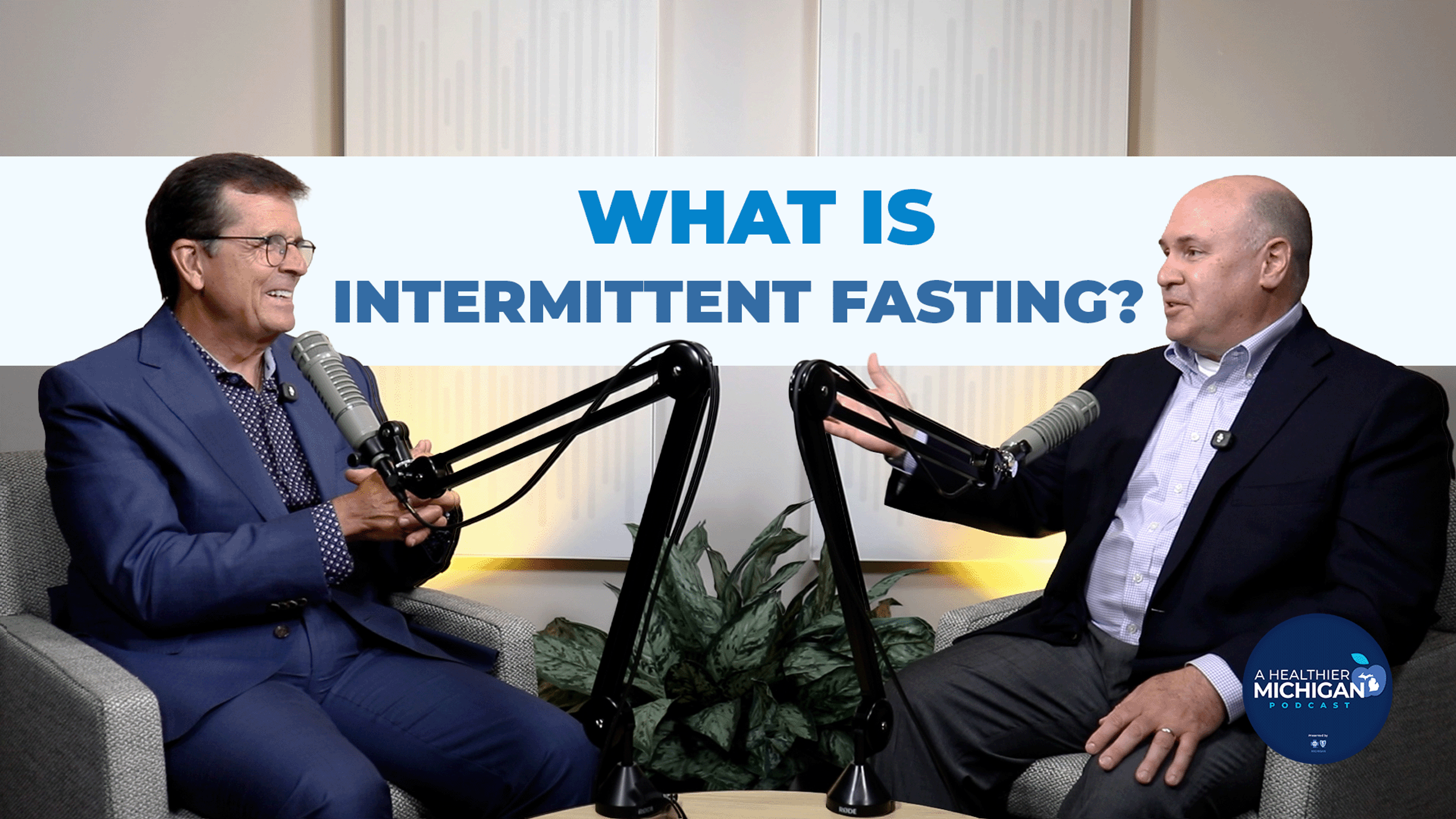
Skipping breakfast. Eating only during certain hours of the day. Limiting meals a few days each week. Intermittent fasting has become one of the most talked-about nutrition trends in recent years. On this episode, Chuck Gaidica is joined by Blue Care Network Chief Medical Officer, Dr. Peter Graham, to explain intermittent fasting, how to practice it, the different types and if it’s right for everyone
In this episode of A Healthier Michigan Podcast, we explore:
- What intermittent fasting is
- Different fasting techniques
- The benefits
- The risks and safety
Transcript
Here is the full transcript of this episode. You can listen to the audio version on streaming platforms or watch on YouTube.
Chuck Gaidica: Skipping breakfast, eating only during certain hours of the day, limiting meals to a few days each week. Intermittent fasting has become one of the most talked about nutrition trends in recent years. But beyond the headlines and social media advice, many people still have questions about how it actually works and whether it's even healthy. So today, we're breaking down the science behind intermittent fasting, the different approaches people follow, and what listeners should know before deciding whether it's right for them.
Chuck Gaidica: Welcome to a Healthier Michigan Podcast. I'm your host, Chuck Gaidica, and every other week we explore topics that help you live your healthiest life. Today, we're joined by Associate Chief Medical Officer of Blue Cross Blue Shield of Michigan, Dr. Peter Graham, to discuss intermittent fasting, how it works, the potential health benefits, and who may need to approach this even more cautiously.
Chuck Gaidica: Well, it's good to have you back.
Dr. Peter Graham: Thank you, great to be here.
Chuck Gaidica: So this idea of intermittent fasting, we hear about it intermittently, but what is it exactly?
Dr. Peter Graham: As the name would imply, it's fasting intermittently. Most people are familiar with diets that tend to work around qualitative or quantitative ideas. Either you're restricting calories and counting them, or you're looking at specific macronutrients to either emphasize or avoid, like a high-protein or keto-type diet. Intermittent fasting, by contrast, is really about timing, defining time periods when you don't eat and times when you do eat. There are many different ways to do it and some interesting physiological reasons why it may work.
Chuck Gaidica: So historically, and even today, the "intermittent" part, like the word "breakfast," means to break a fast. We stop eating at 7 or 8 pm, we don't eat all night, and then we start again with breakfast. That's not always the usual American diet, where you might grab a nibble while watching something at night. But if you do follow something similar, no snacking after dinner and then you start eating at breakfast, that itself is an intermittent fast, isn't it?
Dr. Peter Graham: That's absolutely right. There are a couple of reasons this has become so popular. It's relatively easy. If you've ever tried to count calories for any period of time, you know it's not difficult, but it's burdensome. You have to do it all the time. Or, if you're trying to avoid eating certain things, it gets difficult. Watching the clock, however, is something we do all the time. Most of us have a built-in fasting period in our life, it's called sleep. So building off that is a relatively good springboard for most people.
Chuck Gaidica: Why do you think this became so popular? Is it the convenience? Or maybe some people just say, "I skip breakfast anyway, then I head to work," so in essence, they were fasting but didn't think about it that way.
Dr. Peter Graham: Kind of, yes. It's a combination of things: it took hold in popular media, people saw some success, and emerging science shows it's actually beneficial in other ways health wise. Combine those factors, and it's a relatively easy thing for people to try, which is why it's taken hold.
Chuck Gaidica: Growing up, I always heard, "Don't skip breakfast, you need a good breakfast." Then you start to see these things hit popular culture. So, if we are going to fast in any fashion, what is it actually doing to the body? Because as you're saying, it's not all bad, there is research showing upsides.
Dr. Peter Graham: Absolutely, that's a really good question. The typical American diet includes three square meals a day, starting with a big breakfast, plus snacks in between, sometimes right up until bedtime. Physiologically, every time you eat, your pancreas secretes insulin. Most of us are walking around with our insulin levels a little higher than baseline. When people fast for a period of time, it takes about 10 to 12 hours before they get into that sweet spot of not eating, and their body reaches basal metabolic rate. What your body does with nutrition at that point is very different compared to the fed state most of us are in. In the fed state, your body tends to store energy as glycogen in your liver, kidneys, muscle, and as fat tissue. In a fasting or basal insulin state, your body tends to use energy immediately and devote more resources to repair, such as cells and tissues, because insulin levels are low. That's a rough sense of what happens physiologically.
Chuck Gaidica: And there's also the upside of repairing cells, which you hear more about now, autophagy. Is that a real thing?
Dr. Peter Graham: It is a real thing. There are a lot of different hormones that work differently in a fed versus fasting state. Fasting is what you're aiming for, not starvation. In that sense, your body focuses on tissue repair and cell efficiency. Also, and this is really important for intermittent fasting, hydration is crucial. You need to be fasting, but not dehydrated. It's like running a car with no oil otherwise.
Chuck Gaidica: So, when we say intermittent fasting, we're talking about fasting from food, not water.
Dr. Peter Graham: Absolutely. You can and should be drinking water all day. Non-caloric liquids are perfectly fine; water is ideal.
Chuck Gaidica: Are there specific interval patterns that are most common or most effective?
Dr. Peter Graham: The most common is the "16 and 8" pattern, fasting for 16 hours and eating within an 8-hour window, usually overnight with a few hours on either side. Some people do alternate day fasting, one day on, one day off. It's highly individual; there's no ideal, just what works for you. All these approaches can be effective.
Chuck Gaidica: So, 24 hours without food, just the idea of "food noise" would be tough for some.
Dr. Peter Graham: It can be, but what’s interesting is that a lot of people find they have more energy and focus after fasting for a while. It really depends on the individual.
Chuck Gaidica: Is intermittent fasting actually burning fat, or is it just about blood sugar?
Dr. Peter Graham: It's about both. By avoiding spikes in blood sugar, most people feel more energy. Mechanically, just having your digestive tract full all the time tends to make people feel tired. Fasting helps regulate this.
Chuck Gaidica: What about downsides, are there groups who need to be cautious?
Dr. Peter Graham: Yes. First, children and young adults up to their early 20s should avoid fasting, as they’re still growing. Pregnant or nursing women should also avoid it. Second, anyone taking daily medications for heart or metabolic issues, like diabetes or hypertension, should check with their doctor before fasting. Third, anyone with a history of eating disorders should be very cautious, as fasting can trigger negative behaviors.
Chuck Gaidica: The 16:8 pattern seems like a good starting point, right?
Dr. Peter Graham: It is. That's why most people end up with the 16:8 pattern.
Chuck Gaidica: What's the healthiest, most realistic way to start?
Dr. Peter Graham: Start small, try tacking on a couple of hours before bed and after waking up. Make sure to hydrate well. And remember, quality and quantity of food still matter. Eating cheeseburgers all day during your eating window won’t get good results.
Chuck Gaidica: I knew a guy who lost weight with keto, eating one big meal a day, but the quality wasn’t great. That seems like an extreme way to go about it.
Dr. Peter Graham: That’s one of the hardest pitfalls with any diet, it’s about changing habits. Radical changes are hard to sustain. Stretching time between meals and avoiding snacks after dinner is easier for most of us.
Chuck Gaidica: As we wrap up, what are one or two great things to focus on with intermittent fasting, and what are a couple of downsides to watch out for?
Dr. Peter Graham: Start small, ease into it and hydrate. The main downside is for people with medical problems or those on medications. Talk to your doctor first. And always listen to your body. If it doesn’t feel right, step back.
Chuck Gaidica: Dr. Graham, it’s always good to see you.
Dr. Peter Graham: Pleasure. Thanks a lot.
Chuck Gaidica: Intermittent fasting continues to be a popular topic in nutrition and wellness conversations. But like many health approaches, it’s important to understand both the potential benefits and the limitations. Finding sustainable habits that support overall health is often more important than following trends. Thanks for being part of our show today. The A Healthier Michigan Podcast is brought to you by Blue Cross Blue Shield of Michigan. If you like our show and want to know more, visit ahealthiermichigan.org/podcast. We have lots of great episodes, and you can leave a rating, share the podcast, or let us know what you think or what we should talk about next time. You can subscribe or favorite us wherever you listen, and also check us out on YouTube. We hope we’ve given you a good tip or two today to keep you healthy. Until next time, I’m Chuck Gaidica. Be well.