When Do Babies Start Smiling, Crawling and Sleeping Through the Night?

Jazmin Anderson
| 3 min read
Key Takeaways
- Social smiling emerges around two months. Reflex smiles appear in the first weeks, but babies typically begin to smile in response to faces and voices at about two months, according to the Centers for Disease Control and Cleveland Clinic.
- Most infants can sleep six to eight straight hours by three months, though sleep may be disrupted around six months due to separation anxiety, overstimulation or overtiredness, according to Stanford Medicine and the Mayo Clinic.
- Babies usually start to crawl between seven and ten months of age. Regular tummy time, motivating toys and frequent floor play help build the strength and coordination needed, according to the Cleveland Clinic.
Seeing your child grow and hit different developmental milestones is exciting, and you may wonder about the average timeline for babies to start smiling, sleeping through the night and crawling. While every baby is different, here’s a guide to a few key milestones in your baby's development.
When do babies start smiling?
During the first few weeks of a baby’s life, their smiles come from reflex as a reaction to physiological triggers like rapid eye movement (REM) sleep, according to the Cleveland Clinic. These smiles are random and are not associated with people or activities.
Babies typically begin to show social smiles around two months old in response to others talking or smiling at them, according to the Centers for Disease Control and Prevention (CDC). However, all babies develop on different timelines. If your baby isn’t smiling by the two-month mark, there’s no need to panic.
Aside from the pace of their development, each baby also has a different personality. Your baby might just not be the smiley type. If your baby smiles infrequently enough to concern you, these are some other behaviors you should pay attention to, according to the Cleveland Clinic:
- Not responding to your voice
- Not responding to your face
- Not showing interest in exploring their environment
If you notice any of these, talk to your child’s primary care provider (PCP).
When do babies start sleeping through the night?
Most babies don't start sleeping a straight six to eight hours until they are about three months old, according to Stanford Medicine.
Once babies begin to regularly sleep through the night, they may still revert to waking up in the middle of the night. This frequently happens around six months old due to separation anxiety. Your baby might not understand separation is temporary. Overstimulation or overtiredness can also cause restlessness.
Here are some ways to help your baby sleep, according to Stanford Medicine and the Mayo Clinic:
- Allowing time for naps each day.
- Not having any stimulation or activity close to bedtime.
- Creating a bedtime routine, such as bathing and reading books.
- Putting your baby in bed while drowsy but awake.
- Giving your baby time to settle down before intervening.
But every baby is on their own timeline for sleeping through the night. There are many variables for an infant’s sleep patterns, including whether they are breast or bottle fed, where they sleep, teething, illness and normal sleep regression patterns. Talk to your child’s PCP about their sleep or if your baby is having persistent trouble falling or staying asleep, especially if it’s a new pattern.
When do babies start crawling?
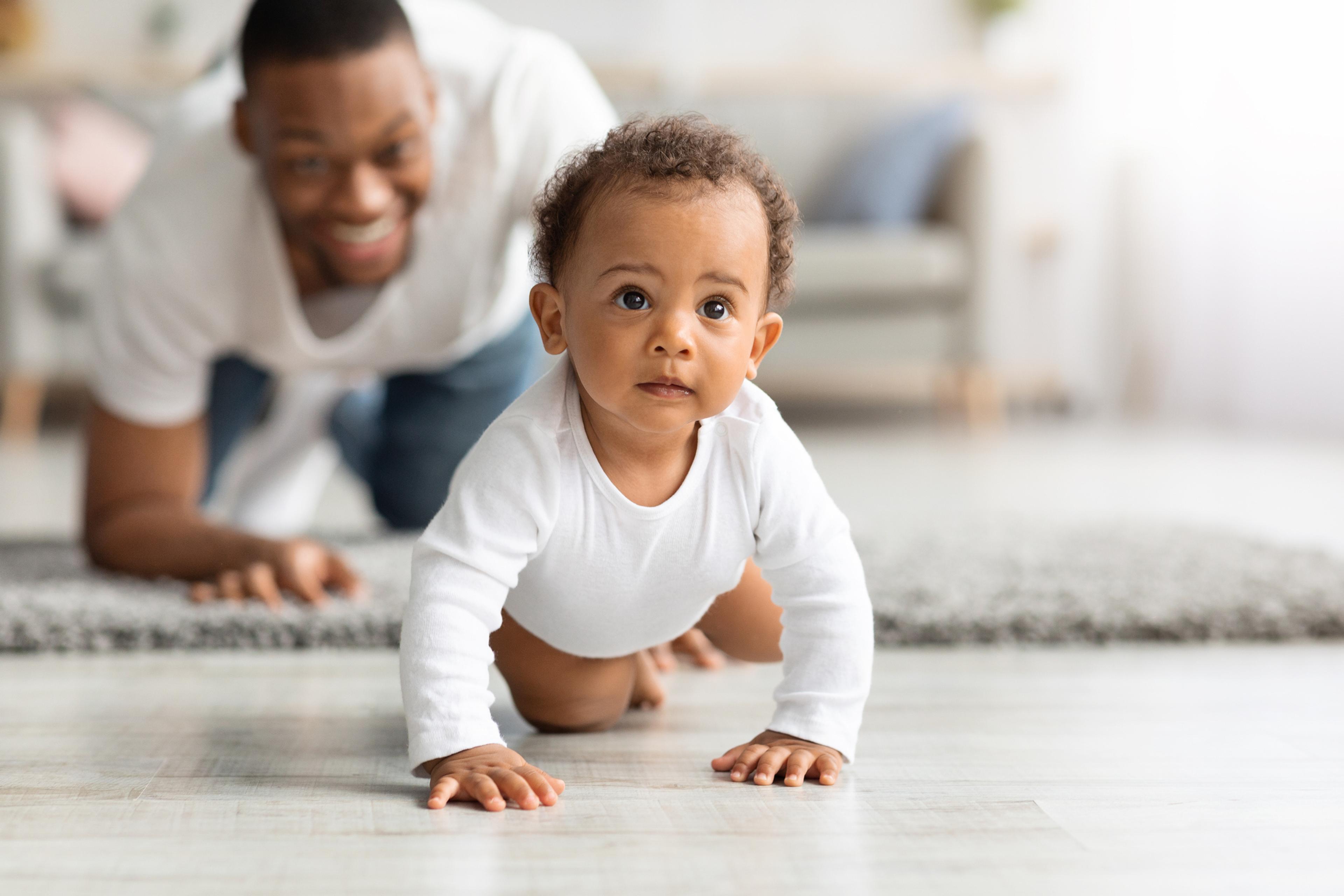
Most babies typically start crawling between seven and 10 months old, according to the Cleveland Clinic.
Giving your children the opportunity and motivation to practice crawling supports their development. Here are some things you can do to help your child learn how to crawl:
- Tummy time: This helps babies strengthen their necks, shoulders and core. If babies cannot roll over, tummy time should always be supervised.
- Use toys: Placing a toy just outside of your baby’s reach gives them the motivation to reach for it.
- Join your baby on the floor: Similarly to toys, if you sit on the floor just out of reach of your child, they might try to move closer to you.
- Practice often: Babies learn through repetition.
All babies are different, so your child taking their time to crawl isn’t something you should panic about. Work with your child’s PCP about the baby’s specific development.
If you are concerned or see some of these signs, consider contacting your child’s PCP:
- Not showing interest in moving or exploring.
- Stiff or floppy when trying to move.
- Not bearing weight on their legs.
- Not reaching other milestones.
Childhood development depends on many things. Some children sleep less than others, and some babies crawl early or later. You’ll learn your baby’s patterns, and your child’s PCP can help you along the way.
Photo credit: Getty Images