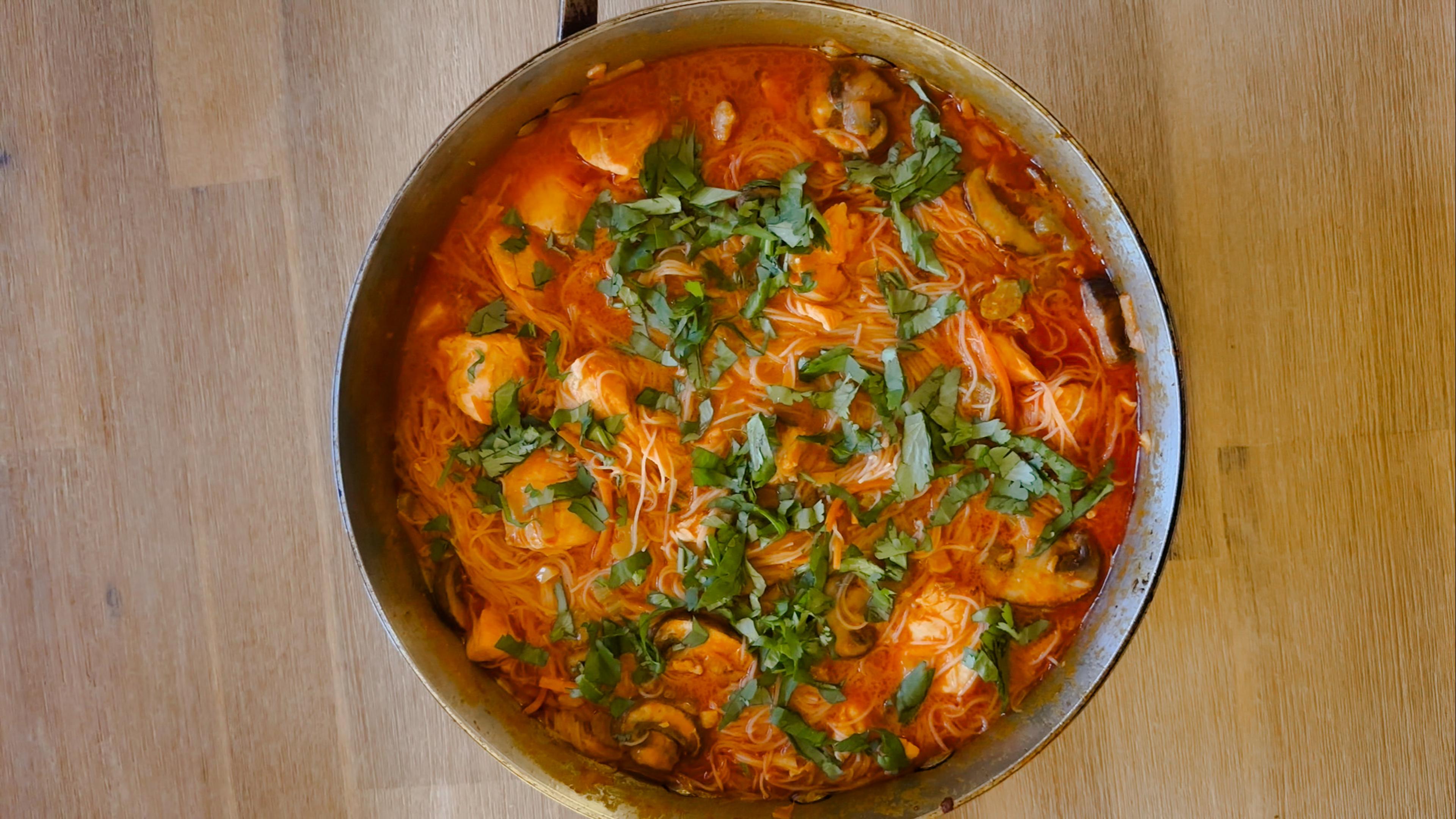
Thai Salmon Curry Soup

| 2 min read
Total Time:
35 minutes
Prep Time:
10 minutes
Cooking Difficulty:
Easy
Serving Amount
Ingredients
2 Tbsp oil, divided
12 oz. salmon, cut to 1-inch cubes
½ onion, chopped
2 cloves garlic, minced
4 oz. jar Thai red curry paste
1 tbsp. lemongrass paste
½ cup shredded carrots
1 cup sliced mushrooms
1 stalk celery, chopped
2 cups vegetable broth
coconut milk
2 Tbsp. brown sugar
Salt to taste
2 oz. dry angel hair rice noodles
½ lime, juiced
cilantro chopped, for garnish
Instructions
Step 1
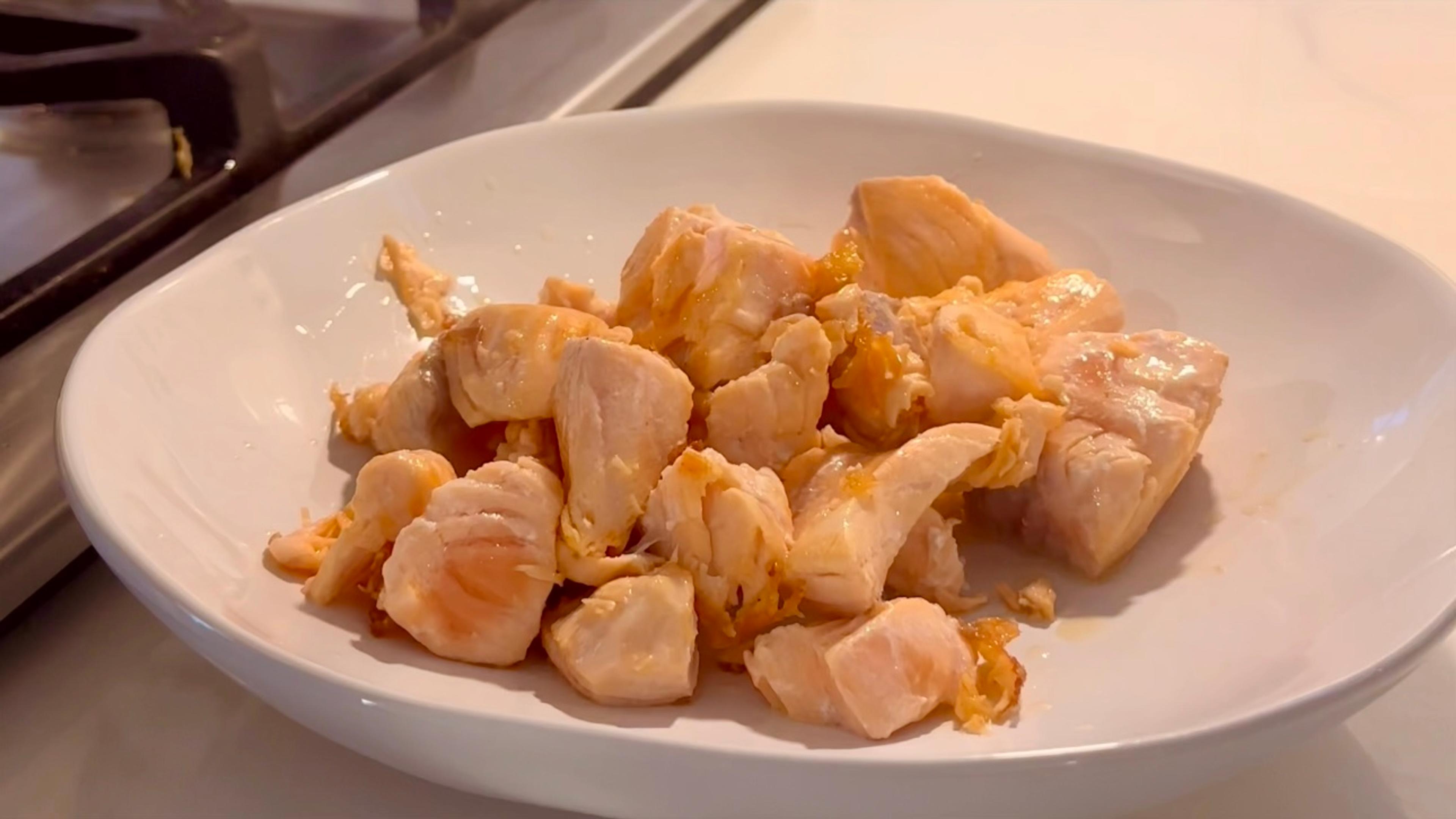
In a large pan over medium-high heat, add half the oil. Once hot, add salmon and sear on each side until golden. Remove from pan and set aside. They do not need to be thoroughly cooked as this will happen in the soup.
Step 2
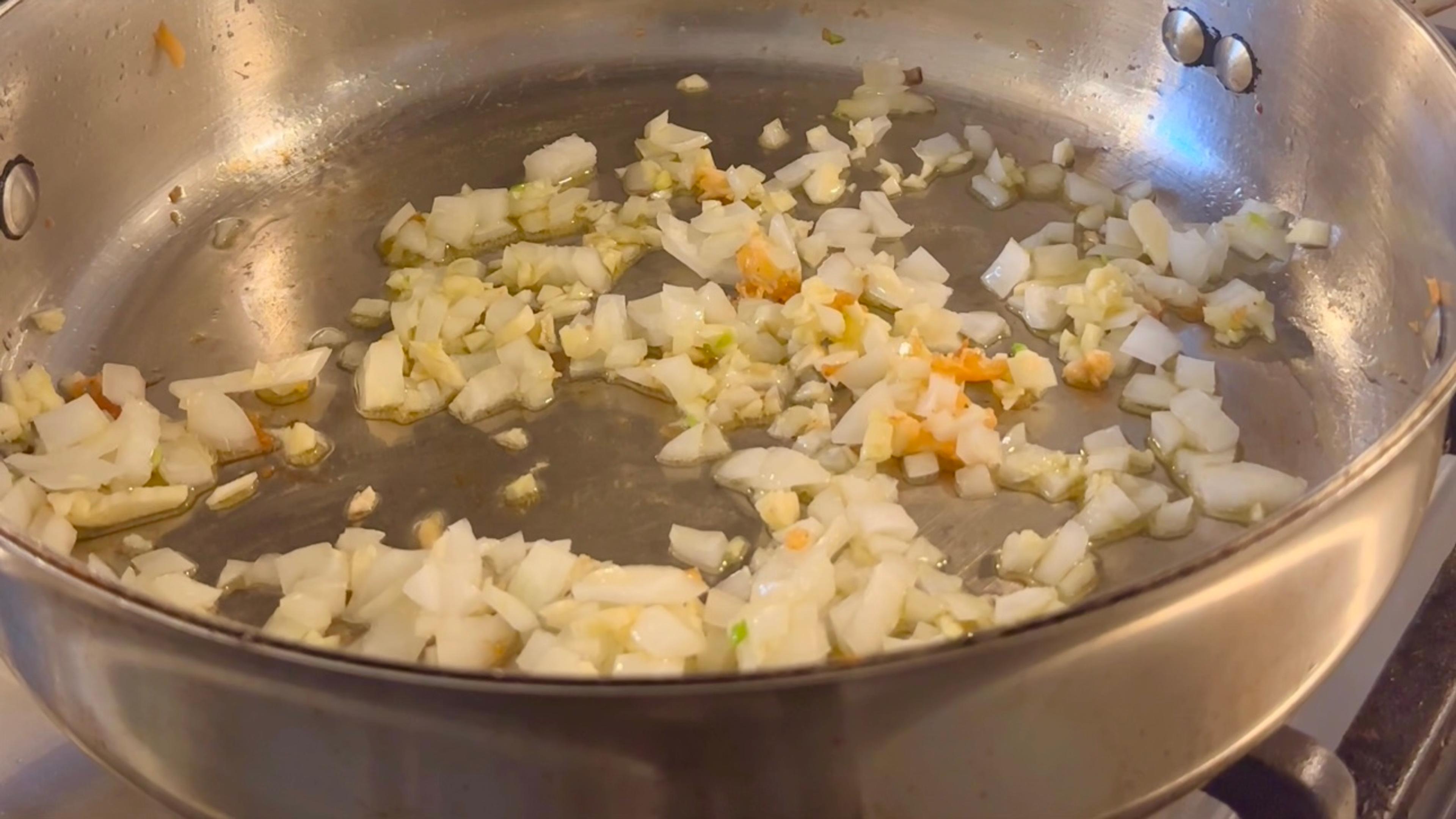
Add the remaining oil and turn temperature down to medium-low. Add onions and garlic and cook until fragrant.
Step 3
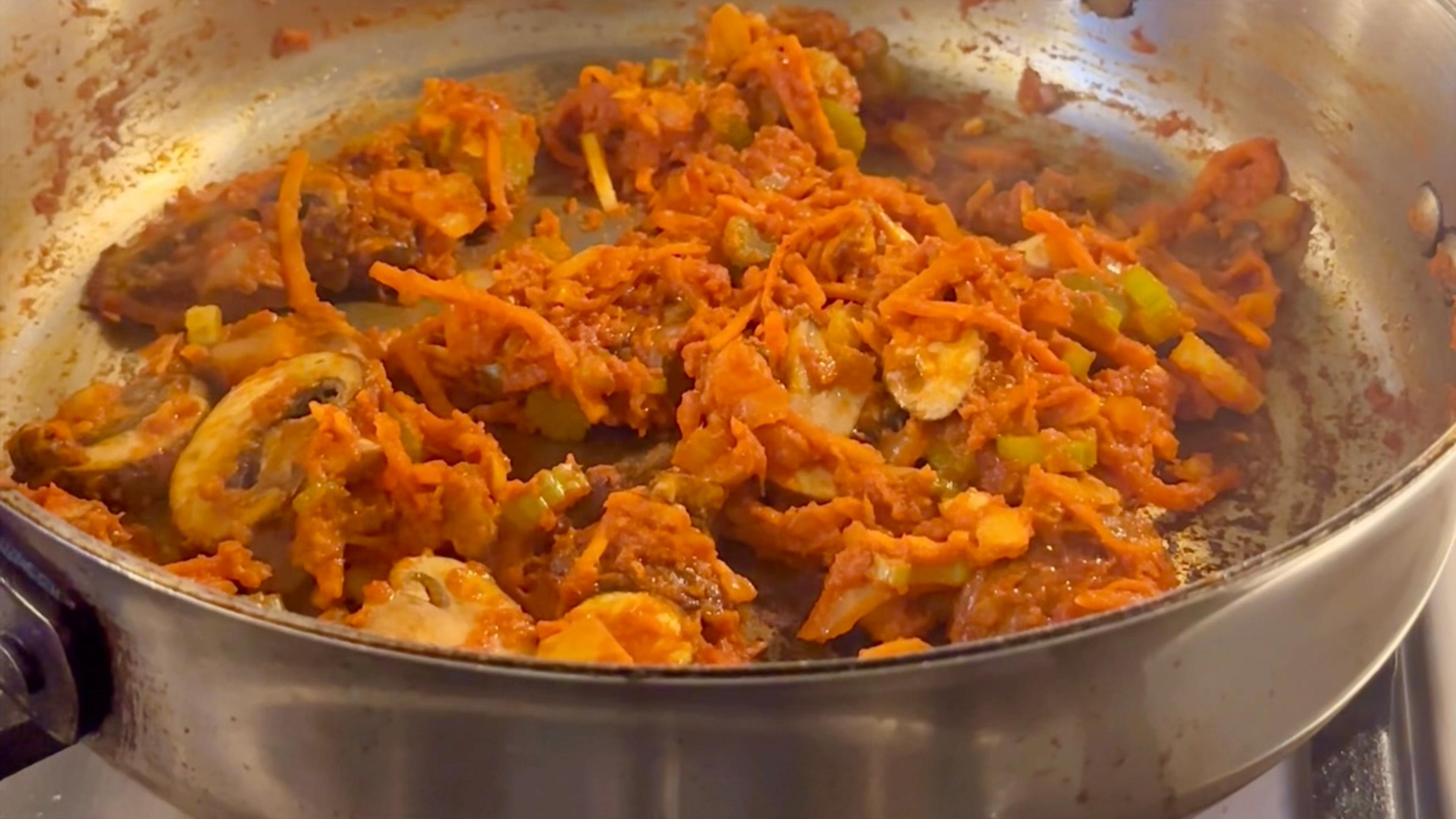
Turn temperature up to medium. Add curry paste, lemongrass paste, mushrooms, shredded carrots and celery and cook for about 5 minutes, stirring frequently.
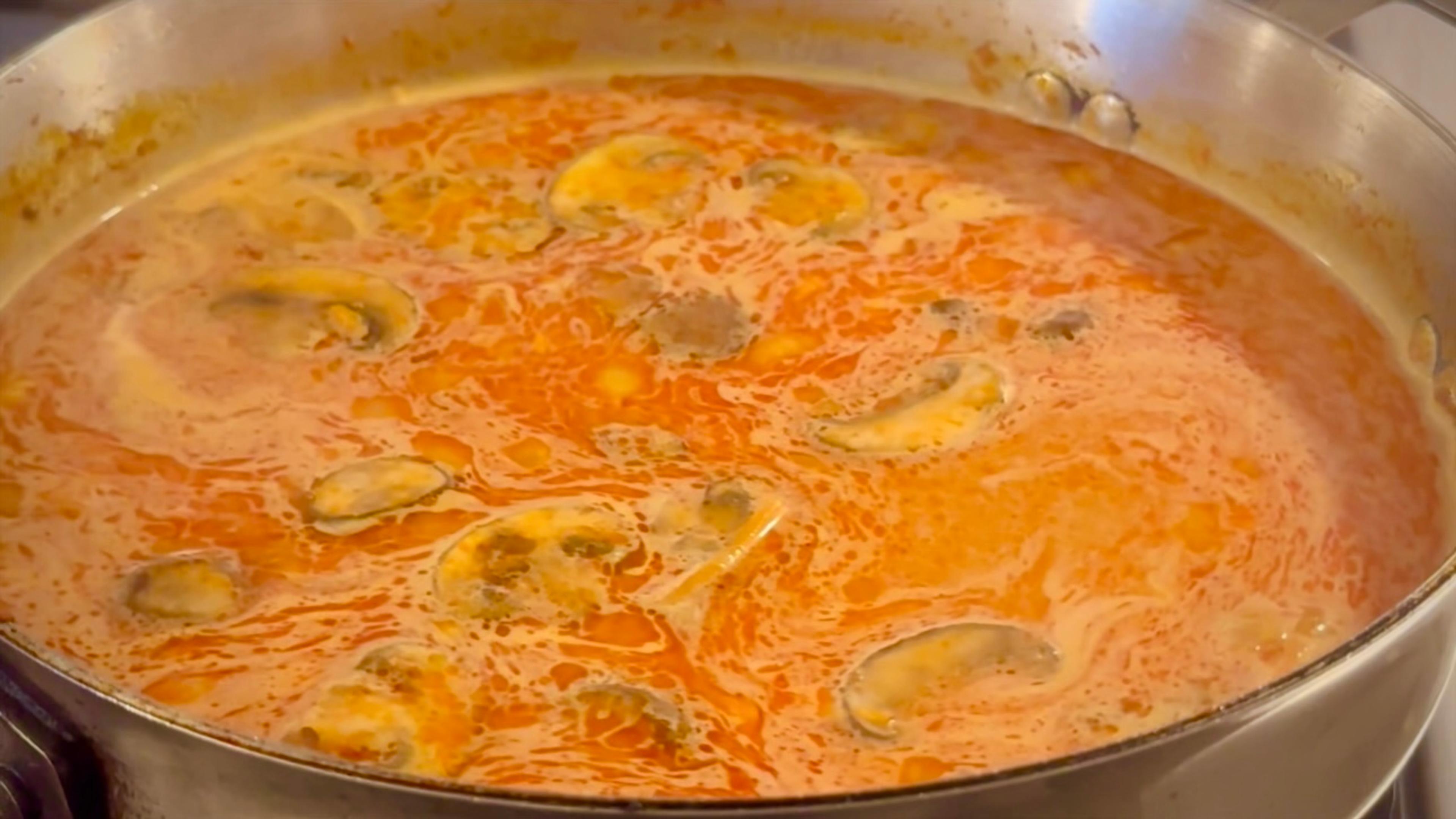
Step 4
Add coconut milk, vegetable broth, brown sugar and add salt and pepper to taste. Allow to cook for 10 minutes.
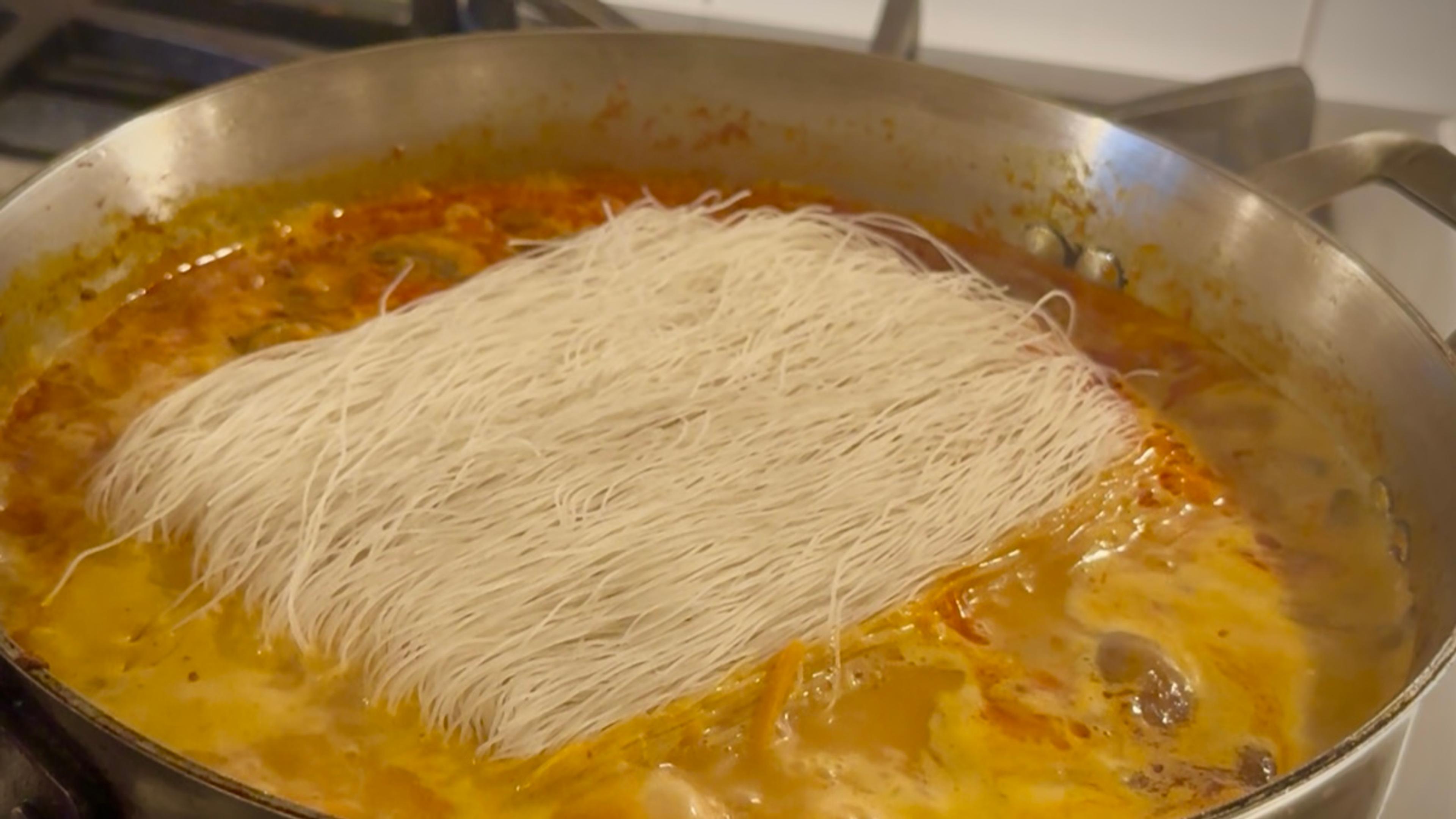
Step 5
Add salmon back in along with angel hair rice noodles until the noodles are cooked, about 8 minutes.
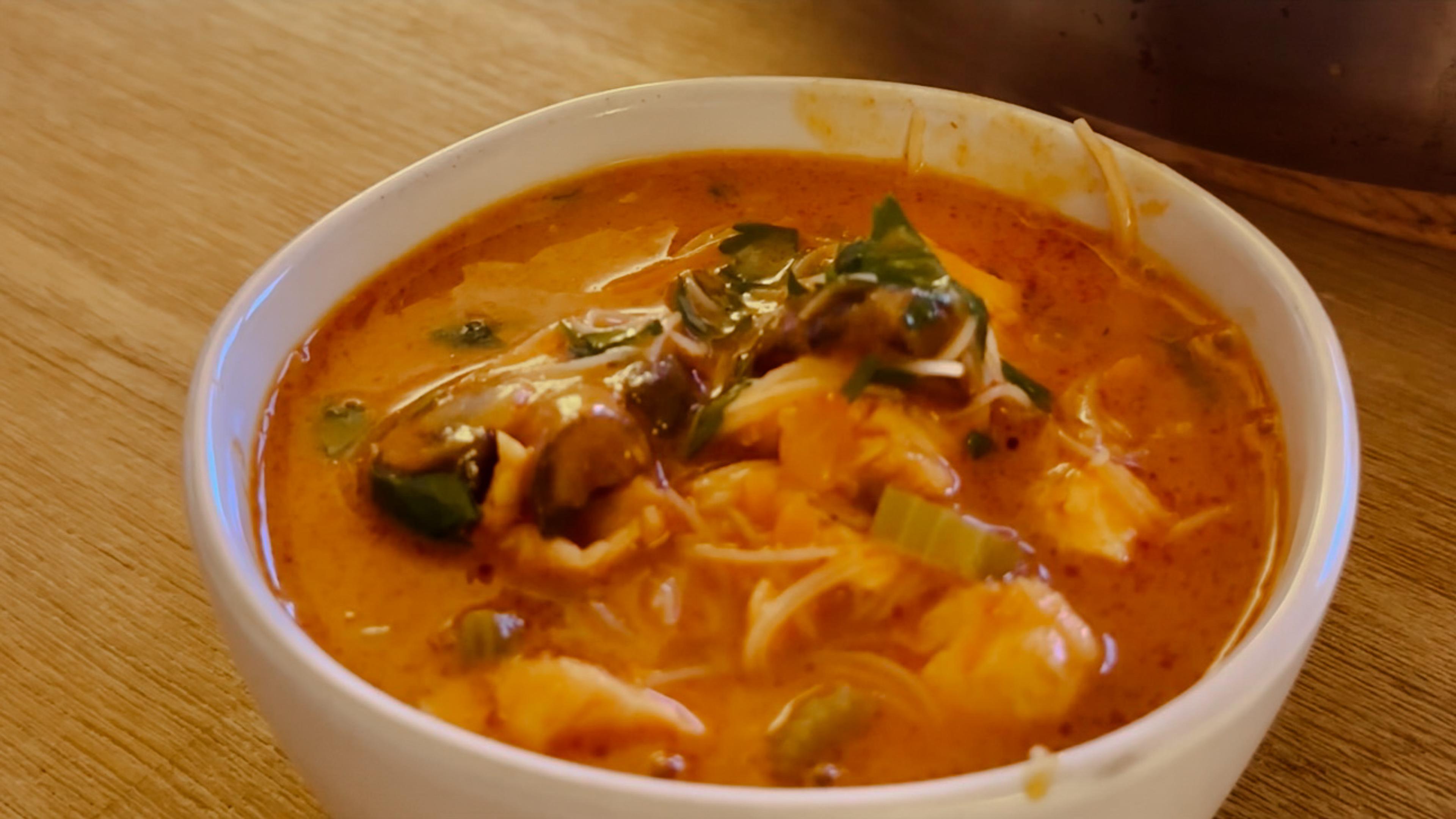
Step 6
Stir in lime juice. Adjust with salt to taste. Serve with chopped green onions.
Frequently Asked Questions
- What can I use instead of lemongrass paste? You can use ginger instead or skip it altogether. Using the squeeze of lime at the end will add a citrusy freshness.
- Why pre-cook the salmon? Getting a nice sear on the salmon will help the salmon hold their shape in the soup, improve the flavor through the light caramelization and prevents overcooking.
- Why is sugar added to this recipe? The sweetness adds balance to the recipe and makes everything taste more cohesive. This equals out about 7 grams per serving. You can tweak the amount of sugar by adding a little at a time and see what it does to the flavor.
- Can I use different noodles? You can use any type of noodle. However, wheat-based noodles can get quite soft in soups if cooked for too long, while rice noodles tend to hold up their texture better in liquids.